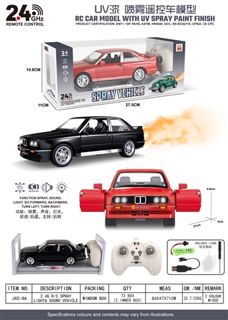
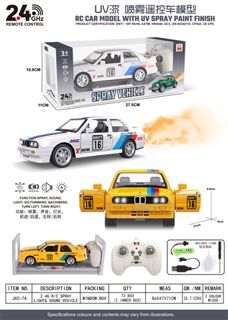
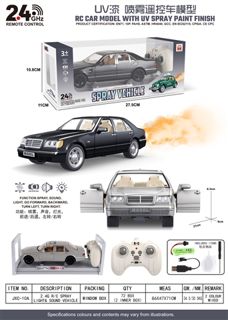
An age number printed on an RC car box is a claim, not proof. For importers, the real deliverable is the age rationale: the documented reasoning that shows which age group the product is primarily intended for, how that conclusion was reached, and which rules follow from it. Before you approve artwork or place a production order, request that rationale in writing — and treat the printed age, the packaging image, and the manufacturer's label as inputs to that decision, not as the decision itself.
This matters because age drives classification, and classification drives duties. Under U.S. CPSC guidance, a manufacturer's label is only one factor in deciding whether a product is a children's product; it cannot by itself guarantee general-use status CPSC: Children's Products. A stated intended age of 9 and up does not automatically make a product a children's product either. So the practical task for your rc car product documents for importers is not "what age is on the box?" but "what evidence supports that age, and does the rest of the file agree with it?"
What determines an RC car's age label?
Age determination is a structured judgment about the product and its likely use, not a number pulled from a spec sheet. In the United States, CPSC staff use the Age Determination Guidelines issued in January 2020, which Congress mandated as one of the four factors for determining whether a consumer product is primarily intended for a child 12 years of age or younger CPSC: Children's Products. The guidelines look at how a product is designed, how it is marketed, and how children of different ages actually play with it.
For an RC car, that means the analysis considers far more than speed or scale. Controls that require fine motor precision, the appeal of stunt and drift features, assembly or charging steps, and whether the product is realistically aimed at older hobbyists all feed into the age conclusion. A testing company's summary of the process notes that age determination is typically the first step, and that the resulting age group then shapes which hazard tests are applied and how intensively Shanghai Liangyuan testing summary. In other words, the age conclusion is upstream of the test plan — not a caption added afterward.
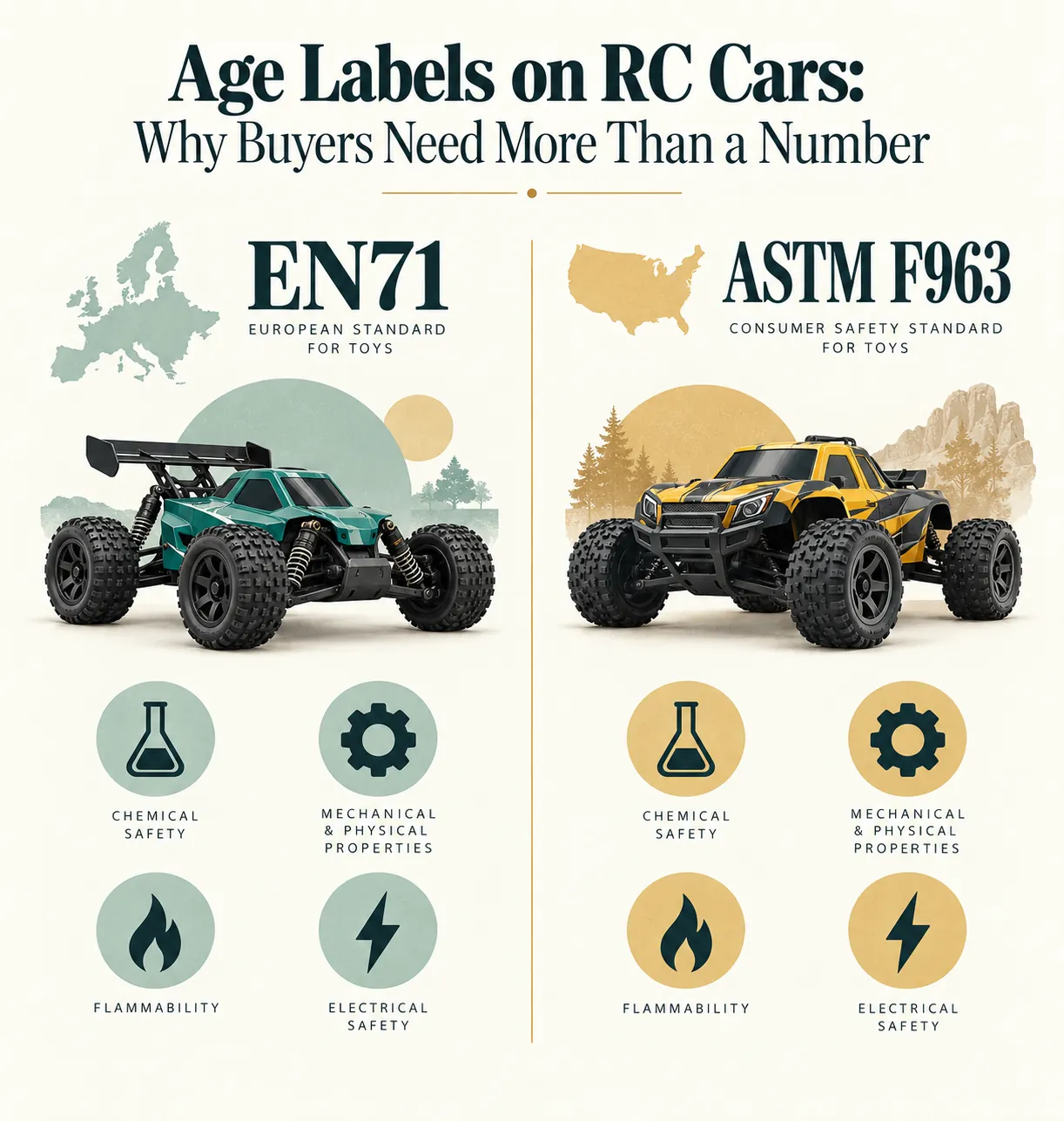
Different jurisdictions run comparable but separate processes. The same testing summary describes the EU approach as referencing ISO/TR 8124-8:2016 and judging play age from characteristics such as difficulty, color and quantity, with the result printed on the packaging. Similar logic does not mean identical rules, so match the file to the destination market rather than assuming one age rationale travels everywhere.
Children's product or general use? The classification question behind the label
Classification is the hinge. If an RC car is a children's product, U.S. rules require third-party testing and a written Children's Product Certificate (CPC) demonstrating compliance CPSC: Children's Products. If it is a general-use product, that particular path does not apply. The label alone does not settle which side you are on.
CPSC states plainly that a manufacturer cannot simply label a product to ensure it is not considered a children's product. Any label must be reasonably consistent with the expected use patterns for that product. And a stated intended age of 9 and up does not automatically classify a product as a children's product — children aged 9 to 12 have advanced cognitive and motor skills, and some products for that group may be equally or more appealing to consumers aged 12 and up.
The practical consequence for importers: ask the manufacturer to document the classification conclusion and the reasoning behind it, then check that the packaging, the marketing copy, and the test file all point the same direction. A mismatch — say, a 14+ label on a product whose advertising targets eight-year-olds — is a red flag worth resolving before shipment, because it undercuts the credibility of the entire age rationale.
Small-parts warnings are a separate requirement from age grading
Do not fold choking-hazard labeling into the age number. They are distinct obligations with distinct triggers. Under U.S. CPSC rules, children's products intended for use by children under 3 that present a choking, aspiration or ingestion hazard because of small parts are banned hazardous substances, codified at 16 C.F.R. part 1501 CPSC: Small Parts Ban and Choking Hazard Labeling. A small part is defined by fitting entirely into the small parts cylinder, without compression and in any orientation — a gauge that approximates the fully expanded throat of a child under three.
Separately, certain children's products that are or contain small parts, balloons, small balls or marbles must carry a warning label telling consumers not to buy them for children under a certain age, under 16 C.F.R. § 1500.19. Advertising for subject children'CarToySupplier must use the same warning under § 1500.20 CPSC: Small Parts Ban and Choking Hazard Labeling. That second requirement is about warning communication, not about re-grading the product's age.
For an RC car, small components — screws, pins, battery clips, tire inserts, detachable spoilers — are the usual candidates for a small-parts question, but whether any of them actually triggers the ban or the warning depends on the product's intended-use age and the specific component. This is a determination to verify against the applicable rule text, not to infer from a catalog photo or a hand inspection of a sample.
What to request in the age rationale file
A defensible age rationale is a short, specific document set. Ask for the manufacturer's written age determination and the reasoning behind it, the classification conclusion (children's product or general use) with the basis for that call, and the test reports that follow from the classification. If the product is classified as a children's product, the CPC should be present, and where the small parts ban applies, the CPC citation is "16 CFR part 1501 – Small parts" in section 2 CPSC: Small Parts Ban and Choking Hazard Labeling.
Then check consistency across the file. The age on the packaging should match the age in the report, which should match the age used in the test plan, which should match the age implied by the marketing. Where a choking-hazard warning is required, confirm the same warning appears in advertising, not just on the box. Any gap between these documents is the thing you are actually buying protection against.
Keep jurisdiction explicit. A U.S. CPC does not speak to EU or Canadian requirements, and a Canadian file does not substitute for U.S. documentation. Canada'CarToySupplier Regulations SOR/2011-17 were last amended on 2024-11-20 by SOR/2024-217 and are shown as current to 2026-09-21 on the Justice Laws site Toys Regulations SOR/2011-17 — useful for confirming currency, but it does not itself establish an age label for any specific RC car.
Age rationale evidence checklist for RC car importers
| Written age determination | Manufacturer's stated intended age group and the reasoning behind it |
|---|---|
| Classification conclusion | Children's product or general use, with the basis for the call |
| Age Determination Guidelines reference | Confirmation that the January 2020 guidelines were considered (U.S.) |
| Third-party test reports | Reports matching the classification and the applicable rules for the destination market |
| Children's Product Certificate | Required where the product is classified as a children's product (U.S.) |
| Small-parts assessment | Whether components fit the small parts cylinder and whether the ban or warning applies |
| Choking-hazard warning text | Exact wording, placement on packaging, and matching use in advertising where required |
| Packaging artwork vs. report age | Confirmation that the printed age matches the report and the test plan |
| Marketing copy vs. label | Confirmation that advertising targets the same age group as the label |
| Destination jurisdiction | Which market's rules the file is built to satisfy, stated explicitly |
Buyer questions on RC car age labels
Does a '9+' label mean the RC car is not a children's product?
No. CPSC states that a stated intended age of 9 and up does not automatically classify a product as a children's product. The classification depends on the facts and circumstances, including expected use patterns.
Can a manufacturer label a product to avoid children's product rules?
No. CPSC states that a label is only one factor and cannot by itself ensure general-use status. Any label must be reasonably consistent with the expected use patterns for the product.
Is the age on the box the same as the age in the test report?
They should agree, but they serve different roles. The report age field does not by itself determine the correct age label; the age determination is the upstream decision, and the report should reflect it.
Do small-parts warnings replace the age label?
No. Choking-hazard warning labeling under 16 C.F.R. § 1500.19 is a separate requirement from age grading, and advertising must use the same warning under § 1500.20 where it applies.
Can I determine the age group from a product photo or a sample?
No. Age determination is a documented judgment based on design, marketing and play patterns. A catalog photo, a mechanism, or a hand inspection does not establish the age label or legal safety.
Does a U.S. CPC cover EU or Canadian requirements?
No. Each jurisdiction has its own rules and documentation. Match the file to the destination market and confirm currency of the applicable regulation separately.
Sources
- Children's Products | CPSC.gov
- Small Parts Ban and Choking Hazard Labeling | CPSC.gov
- 儿童玩具检测中的玩具年龄标识是什么意思?_上海量远检测公司
- Toys Regulations (SOR/2011-17)
Build the age rationale into your next RC car order
If you are sourcing RC cars and need the age rationale, classification basis and packaging artwork reviewed together before production, send us the product details and destination market. We can coordinate sampling, standard customization and packaging checks at established industry level, and confirm current specifications against your order.