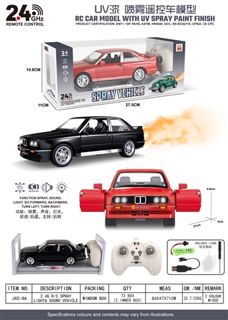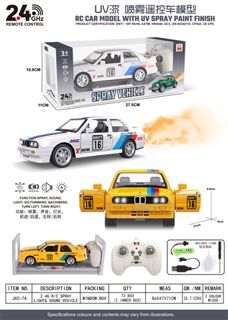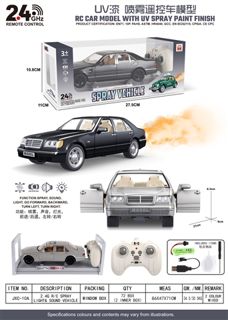
To compare RC car supplier quotations fairly, restate every bid on one currency, one Incoterm with a named place, one quantity tier, one pack specification and one accessory list before you score anything — and keep confirmed facts, priced assumptions and unresolved checks in separate columns. A quote is not comparable while its technical exceptions, manufacturing site, quantity basis, tooling, packing or delivery basis are blank.
Ten factories answer one RFQ and you get ten spreadsheets with nothing in common: one price quoted FOB, another CIF, a third with tooling amortized, and almost nobody describing packaging. Convert first, score second. This page gives you the normalization table, the document set a customs officer actually asks to see when a container is pulled, and the exact questions to put back to suppliers before you award.
What documents does a customs officer ask for when an CarToySupplier shipment is examined?
| Commercial invoice | Why the officer asks: to verify value, currency, seller/buyer, terms of sale and the description of goods against the entry | Where it should be: buying team file, matched to the PO and the supplier's dated quotation | If you do not have it: valuation and description disputes hold the release; the invoice must state currency and the Incoterm with its named place, not just "FOB" or "CIF" | |
|---|---|
| Packing list | Why the officer asks: to reconcile carton count, units per carton, net and gross weight, and dimensions against what was declared | Where it should be: with the invoice, using the same carton numbering as the shipping marks | If you do not have it: the container may be partially unpacked to count cartons — the most expensive way to discover your units-per-carton field was blank | |
| Test report / children's product certificate file | Why the officer or the buyer's compliance lane asks: CPSC identifies the domestic manufacturer or importer as the CPC certifier and requires information about the test-record holder, manufacture, testing and accepted laboratory | Where it should be: buyer's compliance folder, not the forwarder's email thread, with model identity and dates confirmed | If you do not have it: listing the word CPC in a catalog is not equivalent to providing these records; request the actual file and confirm responsible parties, dates and model identity | |
| Battery / accessory declaration | Why the officer asks: lithium cells and chargers change handling, documentation and carrier acceptance rules | Where it should be: attached to the quotation as a line item, and repeated on the packing list | If you do not have it: the accessory list was never normalized, so nobody can say whether the charger in the box was priced in | |
| Origin and manufacturing-site statement | Why the officer asks: to test the declared origin against where the goods were actually made | Where it should be: supplier's written statement naming the manufacturing site, kept separate from the buyer's own origin determination | If you do not have it: a trading address or a sales office is not the factory; blanks here are the ones that hurt after the PO, not before | |
| Product identity evidence (model, artwork, packaging mock-up) | Why the officer asks: to confirm the examined goods are the goods described and tested | Where it should be: one revision-controlled specification sheet, referenced by revision number on the PO | If you do not have it: model identity cannot be tied to the test records, and the whole compliance lane restarts |
Worked example (illustrative, not a real shipment)
A buying team issues one RFQ for a 2.4G stunt car line and receives three replies. Supplier A quotes 5.76 USD FOB, Supplier B quotes 4.91 USD EXW, and Supplier C quotes 8.39 USD CIF to a European port. Nobody describes packaging. Nobody lists accessories. The team's own internal assumption is that every unit ships with a controller, a rechargeable pack and a USB charger, and that the master carton holds a round number of units — but that assumption exists only in a buyer's head.
The 5.76 USD figure is a reference price from a 2026-10-09 catalog snapshot, not a current quote, and the snapshot records material, packing, MOQ, units per carton, size and weight as not recorded. So the only thing confirmed is the number itself. Currency, Incoterm, pack and accessory are all open. Two destinations are in scope, one with retail-ready packaging and one with plain export cartons, which means pack is not one line but two.
Where this shipment gets held: the packing list. The team converts A and B onto one FOB basis and one currency, prices the accessories they had been assuming were free, and discovers the two destinations need two carton specifications. Then the container is selected for examination at the second destination and the packing list shows one units-per-carton figure while the cartons in the container are packed to the other. Carton count does not reconcile, the container gets partially unpacked, and the release slips. A blank units-per-carton field is a landed-cost line and an inspection risk at the same time.
What to normalize before you score any bid
Normalize currency, Incoterm, quantity tier, pack and accessories — in that order — and write the conversion arithmetic down so a colleague can reproduce it. Cost gaps between bids can look like 5% to 12% while the risk gap is far larger, because the cheap bid excluded testing, documentation or accessory scope. Normalization is how you see which bid you are actually comparing.
Currency. Restate every offer in one currency using one exchange rate on one date, and record the rate and the date in the file. Ask for the quotation's validity window as its own field. A price with no validity date is a price you cannot plan against, and a supplier who quotes in a currency they do not hold is telling you something about how firm the number is.
Incoterm. Use Incoterms 2020 as [rule] [named place or point], not a bare three-letter code. List freight, insurance, export clearance, destination charges, duty and tax inclusions as separate lines rather than folding them into the unit price. Keep the quotation basis separate from your own final customs and contract determinations — a supplier quote is not a customs entry and not a landed-cost model.
Quantity tier and MOQ. Ask for MOQ and lot multiple as their own fields, and price the tier you will actually order first. A quote at a tier you will not hit is decoration. Where a supplier amortizes tooling across a volume, the amortization basis belongs on the quote, not in a footnote.
Pack and accessories. This is where most RC comparisons quietly break. Get units per inner box, units per master carton, carton dimensions, net and gross weight, protection for the electronics, and whether packaging is retail-ready or plain export. Then list the accessory scope per unit — controller, battery or rechargeable pack, charger, spare parts, plug standard — and confirm in writing which of those are inside the quoted price and which are priced separately.
Substitutions and exceptions. Every alternate material, component, finish, test or pack should sit in a deviation schedule with the requirement it touches, what is proposed instead, the reason, the evidence, the price effect and the timing effect. Suppliers who leave a line blank are not being modest; blanks are systematically priced in your favor during quoting and against you after the PO.
Lead time and tooling. Ask for lead time by milestone — tooling or samples, material procurement, production, testing, packing, dispatch — rather than one total. Prototype tooling and production tooling can carry different tool life, maintenance, quality-documentation and cost assumptions even when the geometry is similar, so state which one the quote covers.
Certification and qualification lane. Supplier qualification should evaluate capability, material control, quality records, compliance evidence, capacity claims and subcontracting rather than relying on a catalog page. Where children's products are in scope, ask who is the named certifier, who holds the test records, which laboratory was accepted, and what the test dates and model identity are. A nonconformance report should state the defect, lot, quantity, containment, disposition and responsible decision rather than only a pass/fail note — that structure is what you want to see in a quality file before you need it. According to CPSC, the recall database records market actions and should be searched by product, brand and hazard, but an absence of a recall is not a safety certification.
FAQ
Should I ask every RC supplier to quote on the same Incoterm?
Yes — pick one rule and one named place, and convert everything else to it. Comparing an EXW bid to a CIF bid is not a price comparison; it is a comparison of two different risk and cost boundaries. Ask for Incoterms 2020 in [rule] [named place] form and have freight, insurance, export clearance, destination charges, duty and tax listed separately so the conversion is arithmetic rather than guesswork.
How do I handle a quote that says tooling is amortized?
Make the amortization basis a required field: tooling cost, the volume it is spread over, and whether the price changes if you order less or more. A unit price with tooling buried inside it cannot be compared to a quote with tooling on its own line, and prototype versus production tooling can carry different tool life, maintenance and documentation assumptions even when the part looks the same.
What accessory assumptions should be written into the RFQ for 2.4G RC cars?
List them per unit and mark each one included or excluded: controller, battery or rechargeable pack, charger, spare parts, and the plug standard for the destination. Then repeat the same list on the packing list. Accessory scope that lives only in a sales email is exactly the scope that turns into an unpriced line after the PO is issued.
How do I compare quotations when the packaging is different for two destinations?
Treat pack as its own priced line per destination, not one blended assumption. Capture units per inner box, units per master carton, carton dimensions, net and gross weight, protection for electronics, and whether packaging is retail-ready or plain export. Then make sure the packing list matches the cartons that actually ship, because that is the document that decides whether a container reconciles at examination.
What does a customs officer actually ask for when an CarToySupplier shipment is pulled?
Usually the commercial invoice, the packing list, and the product identity and compliance paperwork that ties the examined goods to the tested model. The invoice should state currency and the terms of sale; the packing list should reconcile carton count and units per carton against the declaration. Model identity matters because it is what connects the goods in the container to the test records behind them.
Does the seller's paperwork settle country of origin?
No. Collect the manufacturing site and the supplier's factual basis for its origin statement, but keep that separate from your own determination — final origin and classification determinations belong with the importer and its broker or counsel. A trading address, a sales office or a ship-from warehouse is not the manufacturing site.
RFQ checklist: what to ask suppliers
Send the same list to every bidder and refuse free-form replies. A template does not stop a supplier from shading a price, but it forces them to leave visible blanks — and blanks are information. Require these as separate return fields: currency and exchange-rate basis with validity date; Incoterm as [rule] [named place or point] with freight, insurance, export clearance, destination charges, duty and tax as separate lines; unit price by quantity tier plus MOQ and lot multiple; tooling and NRE cost with amortization basis; sample cost and sample lead time; packaging specification (units per inner and master, carton dimensions, net and gross weight, retail-ready or export); accessory list per unit marked included or excluded; lead time by milestone; payment terms; warranty trigger point; named manufacturing site; and a deviation schedule for every substitution.
Then verify what sits behind the number on your top three to five bids. Request a sample so pack and accessory assumptions can be checked against the physical unit. Ask for the actual compliance file rather than the word CPC in a catalog. Confirm the exact SKU, model and revision the quote covers, and reconfirm sample, current quote, age evidence and destination documents before award — a catalog snapshot establishes a catalog record only, not certification, age suitability, licensing, stock or factory capacity.
Two closing cautions from teams who have done this a few cycles. First, a quote against a moving specification is worthless as data — freeze the specification sheet, reference it by revision number on the PO, and attach it unchanged to every RFQ. Second, do not award on unit price alone; the bid that excluded testing, documentation or accessory scope is not cheaper, it is incomplete.
Sources
Turn the checklist into a comparison sheet
Buying teams that normalize before they score stop re-quoting, stop re-explaining, and stop discovering pack and accessory scope after the PO. If you are building an RC sourcing program for 2027 and want the quotation template, pack and accessory fields, and inspection document set lined up before you go to factories, talk to our sourcing team about what you are buying and where it is landing.