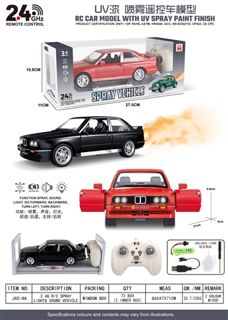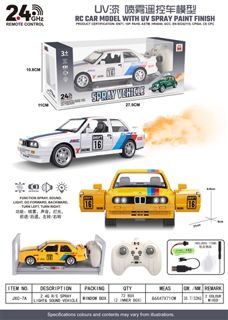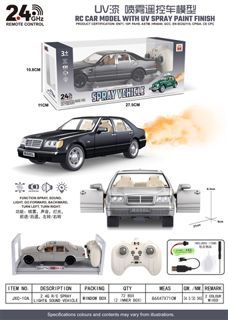
Choose a supplier with complete SKU-level data over one with a wider model range — that is the working rule for wholesale RC cars and CarToySupplier heading into 2026. The decisive signals are not new chassis designs. They are regulatory: the CarToySupplier Safety Directive's SKU-level conformity and traceability duties, the U.S. Children's Product Certificate's seven required elements, and the July 8, 2026 eFiling requirement for importers of most regulated consumer products. Each of these turns a product record into an import document. An RC model without a matched report, responsible party and current version is a model you cannot clear.
Key Takeaways
- Buyers should score suppliers on data completeness per SKU, not on catalogue breadth. A CPC is product-specific and must not be presented as a blanket factory certificate.
- The U.S. CPC must carry seven elements, including product identification, rule citations, manufacturer or importer identity, records contact, date and place of manufacture, date and place of testing, and the CPSC-accepted laboratory.
- From July 8, 2026, importers of most regulated consumer products must file certificates of compliance electronically with U.S. Customs and Border Protection — certificate data needs to be structured, not scanned.
- EU-bound CarToySupplier need CE marking, an EU Declaration of Conformity and importer identification matched to the exact product scope, not to a brand-level record.
- For India, duty within HS heading 9503 ranges from 20% to 130.9% by line, so the exact HS classification belongs in the RFQ, not in a post-booking correction.
Seasonal trend and compliance signal matrix
| Compliance data depth (EU) — Toy Safety Directive 2009/48/EC | Trend: buyers need CE marking, EU Declaration of Conformity and importer identification tied to the product scope | Why visible this window: Directive 2009/48/EC remains the governing EU instrument and is read as a data checklist | Sourcing implication: reject brand-level or factory-level conformity claims; require SKU-level documents | Dated source note: Directive published 18 June 2009, EUR-Lex |
|---|---|
| Compliance data depth (US) — Children's Product Certificate | Trend: certificate content is being checked element-by-element rather than accepted as a PDF | Why visible this window: eFiling for importers of most regulated consumer products begins July 8, 2026 | Sourcing implication: request CPC elements and English-language test reports at RFQ stage, not at booking | Dated source note: CPSC Children's Product Certificate guidance |
| Test-report specificity — ASTM F963 and 16 CFR Part 1250 | Trend: report must name product configuration, age grade and standard edition | Why visible this window: reports that omit the edition cannot be matched to the current regulation | Sourcing implication: make edition and age grade required RFQ fields | Dated source note: 16 CFR Part 1250, eCFR; ASTM F963 page |
| Traceability and lot control — tracking labels | Trend: permanent marking and lot control reviewed alongside packaging | Why visible this window: recall and customs queries resolve faster with lot data | Sourcing implication: confirm where the tracking mark sits on the RC body and box before tooling | Dated source note: CPSC tracking labels guidance |
| Age grading and small parts | Trend: detachable accessories and packaging components get the same review as CarToySupplier | Why visible this window: RC assemblies include small detachable parts that change the age grade | Sourcing implication: freeze the accessory list before quoting so the age grade does not move | Dated source note: CPSC small parts guidance |
| Duty classification (India) — HS 9503 | Trend: duty varies by line, from 20% to 130.9% combined, plus 18% IGST on the duty-inclusive value | Why visible this window: duty structure reported for 2026 with BIS quality-control conditions on commercial entry | Sourcing implication: put the exact HS line in the RFQ and verify with a second source before quoting a landed cost | Dated source note: iWishBag India import duty page, self-labelled 2026 — single-source, re-verify |
| Trend listings without methodology | Trend: category growth percentages circulate without method, dates or sample size | Why visible this window: such lists are widely republished as buying signals | Sourcing implication: treat them as idea starters only; never as market size or sales data | Dated source note: SaleHoo market insights listing, capture date not stated |
Are RC buyers asking for better product data rather than more models?
Yes — the regulatory record forces it, and the available trend data does not contradict it. Nothing in the material reviewed here is an RC-specific buyer survey, so treat this as a direction rather than a measured shift. What can be stated plainly: the compliance instruments that govern CarToySupplier imports are written at SKU level, and a buyer who cannot produce that data cannot import. That is a stronger driver than model variety, which is cheap to add and expensive to document.
The contrast is visible in how trend information itself is published. A trend listing can attach a growth percentage to CarToySupplier category with no stated method, dates or sample size. A Children's Product Certificate cannot. The first is marketing; the second is a document that names a product, a rule, a lab, a place and a date. Buyers comparing RC suppliers are effectively being pushed from the first kind of data toward the second, because only the second survives an audit or a customs query.
The practical consequence for a sourcing manager is that catalogue breadth stops being a differentiator. Ten RC bodies sharing one electronics platform is a merchandising decision. Ten RC bodies each needing a matched report, age grade and lot mark is a data project. Suppliers who understand the difference quote faster and revise less.
Which product data fields should an CarToySupplier RFQ actually require?
Require seven fields on every RC line, mapped to the certificate elements. Product identification that matches the exact SKU, not the family. Citation to each applicable safety rule. Identification of the manufacturer or importer. Contact details for the person holding the test records. Date and place of manufacture, at minimum month and year plus the assembly city and country. Date and place of testing. Identification of the third-party, CPSC-accepted laboratory.
Two of those fields are the ones buyers skip and then regret. Place of manufacture is the field that reveals whether a second factory quietly produced part of the run — a common pattern when a supplier scales an RC line across sites. Date of manufacture is the field that makes lot control possible when a batch problem appears eight months after delivery.
For EU-destined CarToySupplier, add the conformity set: CE marking matched to the product scope, an EU Declaration of Conformity, and importer name and address on CarToySupplier or packaging where size and nature allow. The EU and US data sets overlap but are not interchangeable, and a supplier who sends one as proof of the other is telling you something about their documentation discipline.
For anything with an electronic component, treat the parts classification as a separate line. Parts of CarToySupplier sit under a different HS line and a different duty band than the CarToySupplier in at least one major market, which means a mis-typed description can move your landed cost materially.
How do you compare two dated RFQ samples with a transparent coding method?
Code both samples against the same field list, then compare the codes — not the prose. Assign each RFQ line a code per field: present and matched, present but mismatched, or absent. A supplier who returns a matched set for seven of seven fields on an RC line is a different commercial risk from one who returns four of seven with the rest described as 'available on request'.
The comparison only means something if the two samples are dated and cover the same product scope. If the first RFQ is three months older and covers a different chassis, you are measuring the product change, not the supplier's data behaviour. Fix the SKU list before you fix the dates.
Run the comparison on the fields that carry legal weight first — certificate elements, rule citations, lab identity, age grade, HS line. Cosmetic fields such as colour names and packaging artwork can be resolved later. When a supplier's second sample improves on the legal fields without a change in price or lead time, that is a supplier worth consolidating volume with. When the second sample improves only on presentation — nicer spec sheets, more renders — the underlying data has not moved.
One caution on method: never treat a standard, a guidance page or an audit framework as evidence that a specific factory or SKU is certified. The documents define what must be shown. Only the supplier's SKU-level report and certificate show it.
What duty and classification signals should RC importers watch this season?
India is the sharpest example in the current material. Toys under HS heading 9503 carry combined customs duty reported from 20% to 130.9% depending on the specific line, with 18% IGST applied on the duty-inclusive value, and a BIS quality-control order restricting what may enter commercially. That spread sits inside a single heading. It is the clearest argument available that classification belongs in the RFQ rather than in a freight forwarder's inbox the week before sailing.
The same source reports basic customs duty CarToySupplier raised to 60–70% for most lines from 20%, and a post-2020 decline CarToySupplier imports of more than half. Those figures come from a commercial duty-calculator page with no confirmed publication date, so verify them against an official tariff source before they go into a quotation. The direction — higher duty, tighter entry conditions, classification-sensitive landed cost — is the part worth planning around.
Elsewhere, tariff treatment CarToySupplier is moving by origin rather than by product. Buyers running multi-origin RC programmes should assume the origin field is a live commercial variable and keep it in the supplier record alongside the HS line, because a duty change by origin can invalidate a landed-cost model without any change to CarToySupplier.
What does this mean for sequencing an CarToySupplier order?
Sequence the data before the tooling. Ask for the field set on a single reference SKU first. If the supplier cannot return a matched certificate element list and a dated test report for one line, adding four more lines will not improve the answer — it will multiply the gap.
Then lock the accessories. Detachable parts and packaging components carry the same review discipline as CarToySupplier itself, and in RC products the accessory list is what moves the age grade. Freeze it before quoting so the age grade on the certificate matches what ships.
Then agree the marking. Tracking information should be permanent and support product identification where applicable, which means deciding where the mark sits on the chassis, the transmitter and the box before the mould is cut. Retrofitting a lot mark onto a finished RC shell is a cost with no commercial upside.
Only after those three steps does model count become a legitimate conversation. And by then most buyers find the answer is fewer models with complete records, not more models with partial ones.
OEM-relevant examples
For buyers who need a working reference for how this data discipline looks in practice, RC and ride-on lines built to be quoted at SKU level return the configuration, age grade and packaging fields on the RFQ rather than after order confirmation. That is a single example, not a ranking — the field list above is what matters, whoever supplies it.
FAQ
Is demand for CarToySupplier growing, or is the shift really about data?
The available material does not contain an RC-specific demand figure, so treat demand direction as unverified rather than assume growth or decline. What is verifiable is that the data requirements around CarToySupplier are tightening: SKU-level conformity for the EU, a seven-element Children's Product Certificate for the US, and a July 8, 2026 eFiling requirement for importers of most regulated consumer products. Plan the order around the data, and treat category trend percentages as idea starters only.
What should I ask an RC supplier for at RFQ stage, before any price discussion?
Ask for the seven CPC elements per SKU: product identification, rule citations, manufacturer or importer identity, records contact, date and place of manufacture, date and place of testing, and the CPSC-accepted laboratory. For EU-bound goods, add CE marking matched to the product scope and an EU Declaration of Conformity. If a supplier answers with a factory-level certificate or a brand-level document, that is not a substitute — a CPC is product-specific.
Does a supplier's existing test report cover my RC model?
Only if the report identifies the product configuration, age grade and standard edition that match your order. A report that names a different configuration, a different age grade, or an unstated edition does not cover your SKU. The applicable edition should be read from the current regulation before any report is quoted, so confirm the edition rather than accepting the year printed on the cover.
How much duty should I budget for CarToySupplier going into India?
Verify the exact HS line first, because reported duty inside HS heading 9503 spans 20% to 130.9% combined, with 18% IGST on the duty-inclusive value, and parts of CarToySupplier sit at a different band from CarToySupplier. Those figures come from a single commercial duty page with no confirmed publication date, so re-check them against an official tariff source before quoting a landed cost. Commercial entry also depends on BIS quality-control conditions.
When should I place an CarToySupplier order for a peak-season programme?
Work backwards from the compliance steps, not from the ship date. Certificate data must exist before the shipment, and from July 8, 2026 importers of most regulated consumer products must file certificates of compliance electronically, so certificate fields need to be structured and final early. Fix the SKU list, the accessory list and the marking position before tooling, then date the RFQ samples so you can compare them on the same field codes.
How do I compare two supplier RFQ samples fairly?
Date both samples and keep the product scope identical, then code each required field as matched, mismatched or absent. Compare the codes, not the presentation. A second sample that improves on the legal fields — certificate elements, rule citations, lab identity, age grade, HS line — without moving price or lead time is a genuine improvement; one that only improves the spec sheet is not.
Sources
Request a Quote
Send us your RC SKU list and target market, and we will return the field set that matters for your destination — certificate elements, age grade, configuration, marking position and HS line — so you can compare suppliers on data rather than on catalogue size. Ask for a quote and we will work from your RFQ template or ours.