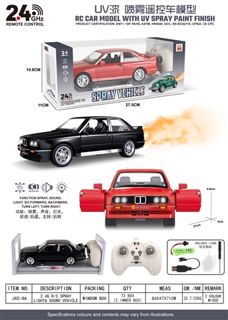
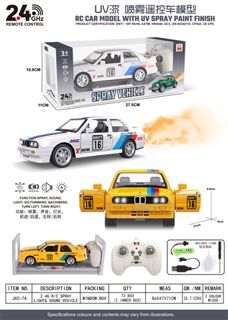
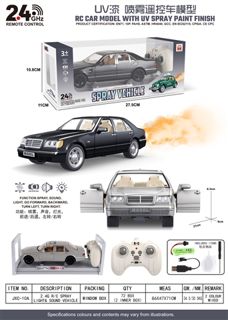
Verify an RC manual against the controller by running a control-to-instruction cross-check on a sealed production sample: confirm the transmitter type, frequency band, channel count, battery format, age grading and function list printed in the manual all match the physical unit and its retail packaging. Release the shipment only when every mismatch is either corrected in the manual or corrected on the product.
This is a documentation-control task, not a lab test. It sits inside the wider rc car supplier quality inspection checklist, but its output is narrow: a signed cross-check sheet that names the manual revision, the sample serial, the checker and the disposition of each discrepancy. Do it before mass production locks the printed manual, because reprinting instructions after cartoning is the expensive version of this problem.
What to check on the controller vs. what to check in the manual
| Transmitter type (pistol-grip vs. stick vs. watch-style) | Manual diagram and text must show the same form factor shipped in the carton |
|---|---|
| Frequency band (e.g. 2.4 GHz) | Band printed on controller label, retail box and manual must agree |
| Channel / function count | Every function in the manual (forward, reverse, steering, flip, arm rotation) must exist on the unit |
| Battery format and cell count | Manual must state the same battery type, voltage and quantity as the product label |
| Charging method and connector | Manual charging instructions must match the supplied cable or dock |
| Age grading and warnings | Manual age statement must match the retail packaging and destination-market requirement |
| Pairing / binding procedure | Steps in the manual must reproduce a successful bind on the sampled unit |
| Spare parts and support contact | Manual contact block must be the buyer's or brand owner's approved channel, not a leftover factory address |
Which sample should the cross-check be run on?
Run it on a sealed production sample drawn after the manual revision is frozen, not on the golden sample used during development. Development samples and pre-production manuals drift apart routinely: a function gets dropped, a battery changes from AA to a rechargeable pack, or the artwork swaps a pistol-grip transmitter for a watch-style controller. A sealed sample from the first cartons catches that drift while there is still time to correct the print run.
Pull at least one unit per manual revision and per color or SKU variant that carries its own instruction sheet. If a single manual covers several SKUs, the cross-check must confirm the manual's variant table actually lists every SKU in the shipment.
How to run the control-to-instruction cross-check
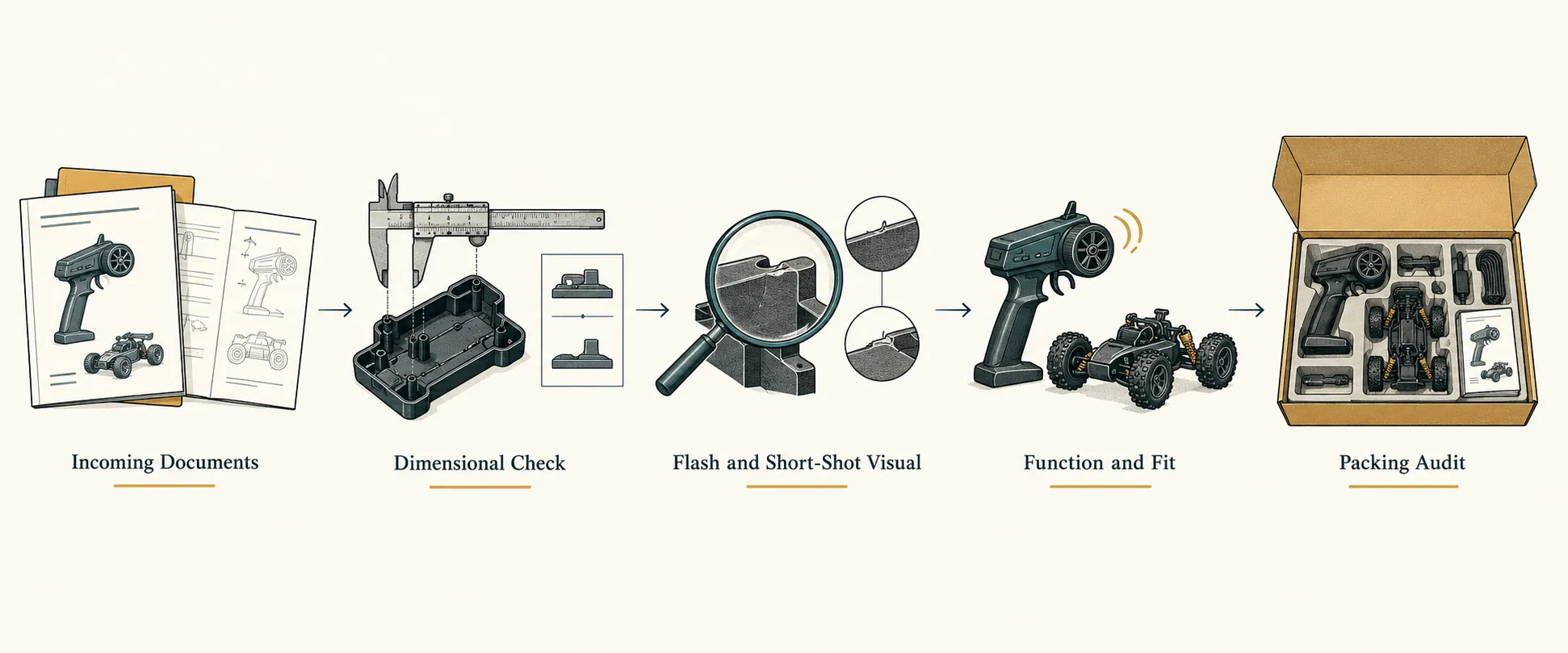
Work from the physical unit outward. Photograph the controller label, the battery compartment, the retail box panel and the manual cover in one frame so the revision and serial are visible together. Then walk the manual page by page and tick each claim against the unit.
Bind the controller to the car and execute every function the manual describes. A function that appears in the manual but not on the unit is a manual defect; a function on the unit that the manual omits is a documentation gap that will generate support tickets. Both are discrepancies and both get logged.
Check the fit of the battery door, the transmitter shell and any clip-on parts. The industry fit check applies here: parts should assemble without excessive force, looseness, interference, sharp exposure or unintended release. A controller that only closes with force, or a battery door that pops open, will be returned as a quality fault even if the manual is perfect.
Finally, confirm the manual's legal and warning block matches the destination market and the age grading on the box. Do not treat a printed warning as proof of compliance; treat it as a claim that must be consistent across box, manual and product.
Records to retain and who owns each step
Keep the cross-check sheet, the dated photo set, the manual revision number, the sample serial and the disposition of every discrepancy. Retain these records long enough to support the buyer's market and recall obligations; supplier records for materials, production, inspection, change control and testing should be kept to that same horizon so a later question can be answered from documents rather than memory.
Assign owners explicitly. The buyer's sourcing manager owns the manual revision approval. The factory quality lead owns the physical cross-check and signs the sheet. The buyer's compliance or product manager owns the age-grading and warning block. Nobody signs off on a section they did not personally check.
| Manual revision approval | Buyer sourcing manager |
|---|---|
| Physical controller-to-manual cross-check | Factory quality lead |
| Age grading and warning block | Buyer compliance / product manager |
| Discrepancy disposition and reprint decision | Buyer sourcing manager with factory quality lead |
| Record retention | Buyer sourcing manager, aligned to market and recall obligations |
Escalation triggers that stop the shipment
Stop the release and escalate when any of the following appears: the manual shows a different frequency band or transmitter type than the unit; the battery format or voltage in the manual does not match the product label; a function described in the manual cannot be executed on the sampled unit; the age grading on the manual and the retail box disagree; or the manual carries a support contact that is not the buyer's approved channel.
Escalate to the buyer's compliance owner, not just the factory, when the discrepancy touches age grading, warnings or battery handling. Those items carry market-specific obligations, and a factory-side correction may not be sufficient on its own.
Limitations of a manual cross-check
A cross-check confirms consistency between the manual, the controller and the packaging. It does not certify safety, prove compliance with any standard, or replace laboratory testing. It also does not confirm stock, capacity or future production consistency; those require separate commercial verification.
Treat the cross-check as one control in a broader inspection plan. Pair it with the fit check, a functional test of the sampled unit and a review of the supplier's compliance evidence. An absence of a recall in a public database is not a safety certification, and a clean cross-check sheet is not a substitute for testing.
Buyer questions on RC manual and controller verification
Should the cross-check be done before or after mass production?
Before. Freeze the manual revision, then cross-check a sealed production sample. Correcting a printed manual after cartoning is far more expensive than correcting it before the print run.
How many units should be checked?
At least one sealed unit per manual revision and per SKU variant that carries its own instruction sheet. If one manual covers several SKUs, confirm the variant table lists every SKU in the shipment.
What if the manual is correct but the controller label is wrong?
Log it as a discrepancy and escalate to the factory quality lead. A label mismatch can mislead the end user and may trigger returns even when the manual is accurate.
Does a clean cross-check prove CarToySupplier is safe or compliant?
No. It confirms consistency between the manual, controller and packaging. Safety and compliance require separate testing and evidence review.
Who should sign off on the cross-check sheet?
The factory quality lead signs the physical check; the buyer's sourcing manager approves the manual revision and the disposition of discrepancies; the buyer's compliance owner signs off on age grading and warnings.