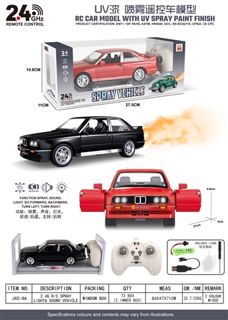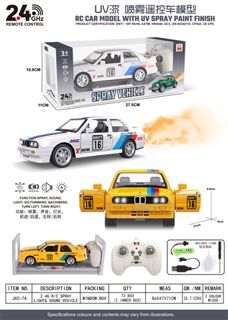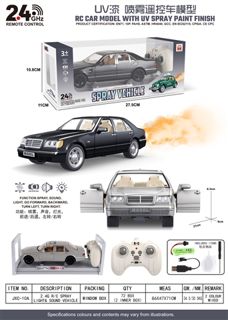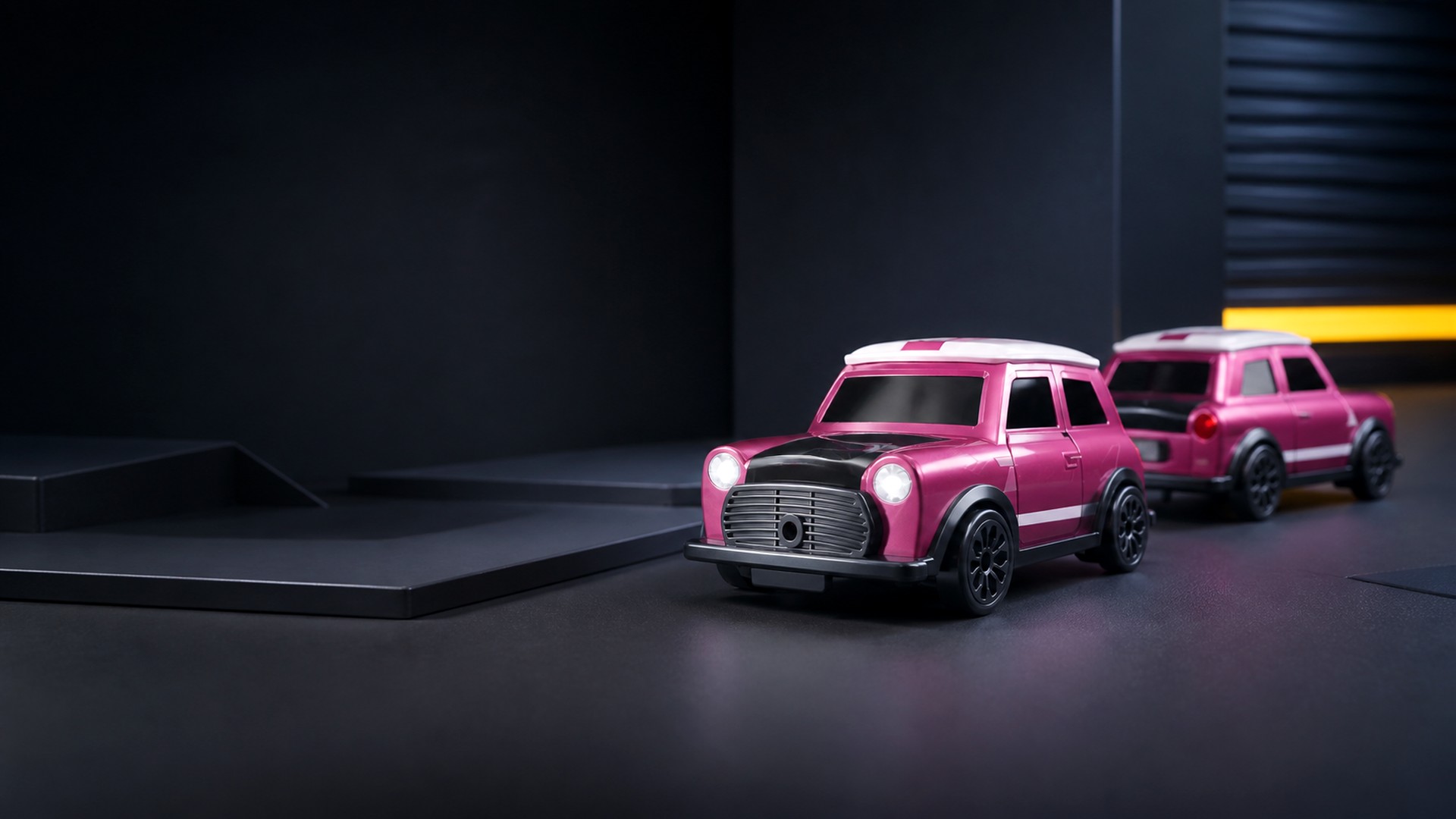
Choose mini RC cars for countertop gift assortments by retail-pack fit and handling accessibility, not by the car’s size or feature count alone. For buyers sourcing mini RC cars wholesale, the shortlist should compare the closed pack, display orientation, controller storage, battery access and charging routine against a defined counter space. Include candidates that meet those requirements, exclude measured mismatches, and hold candidates for sample confirmation before treating them as approved assortment items.
Separate countertop merchandising from countertop driving. A boxed gift can belong on a counter without being suitable for a live tabletop demonstration. Make driving-space checks mandatory only when the assortment brief includes a demonstration.
Which mini RC cars should be included, excluded or held?
Include a candidate when its proposed retail pack fits the allocated display space and its setup, charging and storage routine meets your handling requirements; exclude demonstrated mismatches and hold unresolved candidates.
Define the buying scenario before comparing products: available counter width and depth, overhead clearance, required facings, display orientation, and whether staff will open or demonstrate CarToySupplier. These are buyer-set acceptance criteria, not universal dimensions for a mini RC car.
An exclusion needs a concrete reason: the pack overhangs the fixture, blocks the required label view, or requires a handling step the brief explicitly rules out. A pending measurement or instruction check is a hold, not proof that the product will fail.
Do not require a controller-mounted car holder automatically. It is one useful storage arrangement; a compact tray or reusable pack can serve the same buyer need if it keeps the car, controller and charging accessories together.
Which pack measurements decide countertop fit?
Measure the complete retail pack in its intended selling orientation, including protrusions, rather than using the vehicle’s dimensions as the display footprint.
Record pack width, depth and height with the orientation stated. Identify the actual format—box, blister, can or display case—and check whether it stands as intended, presents the product clearly and remains usable after opening. A small car inside a wide presentation box is still a wide countertop item.
Place the proposed number of packs on the actual fixture or a full-size layout. Leave the handling clearance specified in your brief so staff can remove and replace a unit without disturbing neighboring products. If the pack opens on the counter, check its open footprint separately.
Keep three measurements distinct: the closed retail-pack footprint, the opened handling area and any driving area. For replenishment planning, record the outer-carton dimensions separately; they do not establish how much counter space one gift occupies.
Which catalog candidates merit a sample request?
| 2.4GHz 7-Channel Beetle RC Car with Lights, Sound and Spray | Status: HOLD for pack and handling review. Fits a gift concept that deliberately includes lights, sound and spray. Do not choose it for a brief that rules out sound or spray features. Closing checks: measure the complete retail pack; inspect controller and accessory storage; follow the supplied setup instructions; verify battery access and the charging routine. Include only if the measured pack and observed handling meet the fixture brief. |
|---|---|
| 2.4G RC Stunt Car Truck Drift 360-Degree Rotating Transforming with Lighting Music | Status: HOLD for pack and handling review. Consider for a stunt-led gift concept where rotation, transformation, lighting and music are intentional selection criteria. Do not choose it for a confined live countertop demonstration unless a sample demonstrates the required maneuver within the designated area. Closing checks: measure the retail pack, inspect accessory storage and charging access, and assess the movement envelope if demonstration is required. |
| Comparison outcome | Neither candidate wins on footprint yet: feature descriptions are not pack measurements. Request the Beetle sample first for a Beetle-style, effects-led gift concept; request the transforming model first when stunt action is central to the brief. A feature-led preference determines sampling priority, not final inclusion. |
What should a buyer verify about handling accessibility?
Verify handling accessibility by following the supplied instructions from unpacking through charging, operation and repacking, while recording the tools, loose parts and access steps involved.
Check both power systems separately: the vehicle battery and the controller batteries. Record battery type and count, what is included, how compartments open, and whether charging uses the controller, a cable or a removable battery. Do not infer the charging arrangement from the radio frequency.
A useful reference is an Amazon.de mini RC listing accessed in 2026: it describes a controller with a holder for the car and specifies two 1.5 V AA batteries that are not included. Those details show why storage and battery inclusion belong in the comparison, but they do not establish the dimensions or charging arrangement of another candidate. Amazon.de listing
On the sample, assess whether switches and charging connections are reachable, the intended user can operate the controls, and the car and accessories can be returned to storage without forcing them. Record the actual steps rather than a vague rating such as “easy to use.”
For a live demonstration, use a contained area and the intended surface. Check low-speed control, stopping and turning space before attempting stunt functions. If several cars will operate together, request the pairing instructions and check the intended combination; a 2.4GHz label alone does not establish a simultaneous-car count. These are purchasing checks, not substitutes for safety testing.
What should the pack-footprint and handling decision record contain?
| Candidate and revision | Record the product name, supplier reference, retail-pack revision, sample identifier and instruction revision. Attach dated photographs showing the measured pack and included components. |
|---|---|
| Pack target versus observation | State the allocated width, depth, height, orientation and required facings. Enter the sample's measured retail-pack dimensions, format and fixture-placement result beside those targets. |
| Handling target versus observation | State the required storage arrangement and acceptable setup steps. Record controller storage, battery types and inclusion, compartment access, charging method, required tools and the observed unpack-to-repack sequence. |
| Demonstration target versus observation | When demonstration is part of the brief, identify the contained operating area, surface and intended number of cars. Record observed steering, stopping, turning and pairing behavior against those requirements. |
| Evidence and date | Identify whether each entry comes from a catalog description, supplier instruction, measurement or sample observation. Preserve its date and revision rather than combining these evidence types into a single verified label. |
| Decision and conditions | Enter INCLUDE, EXCLUDE or HOLD with the specific reason. Record any condition, such as approval only for packaged display rather than live demonstration. |
| Approver and follow-up closure | Name the responsible buyer or reviewer and decision date. For each hold, assign an owner and closing action; add the completion date, supporting result and final approval or rejection. |
When is a candidate ready for the countertop assortment?
A candidate is ready for assortment approval when its identified pack meets the fixture requirements, its handling routine meets the brief, and the responsible buyer has closed the selection conditions.
Keep the shortlist decision narrow. Catalog feature descriptions do not establish measured footprint, stock, certification or factory capacity. The external listing supports its own stated battery and holder details only. Pack-fit approval also does not establish age suitability or destination-market compliance; keep those approvals separate.
Preserve the approved sample and pack revision as the comparison reference. The decision record supports traceability, but it does not by itself reveal an undisclosed product or packaging change. Recheck the affected measurements and handling steps whenever a proposed revision changes the pack, controller, battery access or charging arrangement.