You cannot trace the 2008 CarToySupplier racing car recall to a published model number, because the CPSC notice does not contain one. The recall, announced January 23, 2008 in cooperation with OKK Trading Inc. of Commerce, California, identifies the product only by description: a CarToySupplier racing car that came with four additional tires and one remote control, with "Formula 1" printed on the packaging. The published hazard is surface paint containing excessive lead levels, violating the federal lead paint standard; no incidents or injuries were reported. Units sold at retail dollar and discount stores nationwide from October 2007 through November 2007 for about $1, and the remedy was to take the car away from children and return it to the place of purchase for a refund.
The practical takeaway for importers: a recall notice resolves scope through attributes, not item numbers, and it never establishes current supplier risk. This page shows how to match those attributes against your own RC car product documents — paint and coating evidence, packaging artwork, channel and date codes — and which gaps should stop an order rather than be waved through.
Shortlist criteria: what to ask, what proof to collect, what fails
| Paint and coating control (the exact failure mode in the 2008 recall) | Ask: which paint/ink suppliers are used, and is there a written incoming-coating control? Proof: third-party test report on the finished painted part against the destination's lead-in-paint limit, plus the paint supplier's own documentation. Fail if missing: no finished-part test, or a report covering only raw material. |
|---|---|
| SKU and attribute traceability | Ask: can you map this carton, packaging text and date code back to a production batch? Proof: packaging artwork approval file, batch/date coding photos, carton marks. Fail if missing: packaging text or date code cannot be tied to a production run. |
| Product identity attributes | Ask: what distinguishes this car from visually similar models — scale, contents, packaging wording? Proof: current spec sheet and high-resolution sample photos of the exact configuration. Fail if missing: spec sheet lists a family, not the shipped configuration. |
| Channel and price-band realism | Ask: at this FOB price, what is the coating and hardware budget actually buying? Proof: costed BOM showing coating type and battery/hardware grade. Fail if missing: no BOM, or a price that cannot cover the stated coating. |
| Recall and regulatory check before purchase | Ask: has this exact product or packaging ever appeared in a CPSC or EU recall notice? Proof: a dated screenshot/search record of the recall database for the product name, brand and packaging text. Fail if missing: no check performed, or check done against the wrong product name. |
| Recall response process | Ask: if a batch is pulled, who pays for retrieval, and how are batches isolated? Proof: written clause in the purchase agreement covering recall/retrieval cost and batch traceability. Fail if missing: no contractual recall clause. |
What the official notice actually pins down — and what it leaves open
The CPSC notice gives you six usable identifiers and nothing more: the recall date (January 23, 2008), the firm (OKK Trading Inc., Commerce, California), the product (a CarToySupplier racing car with four additional tires and one remote control), the packaging marking ("Formula 1"), the sales window (October 2007 through November 2007), and the channel (retail dollar and discount stores nationwide, about $1). The hazard is stated as excessive lead in surface paint, a violation of the federal lead paint standard.
Three things the notice does not provide: a model or item number, a unit count, and any incident or injury record — none were reported. That is why the exercise is "following paint evidence to a SKU": you reconstruct the SKU from attributes, and you keep the reconstruction honest by labelling every attribute you cannot confirm as unknown. If your carton says "Formula 1" and your sales dates sit inside that window, you have a match worth investigating. If your packaging text differs, you do not get to assume the recall covers you — or that it doesn't.
Does the 2008 OKK recall tell you anything about a supplier today?
No. OKK Trading's 2008 notice is a historical external public record; it is not evidence about any current factory, current inventory, or current supplier compliance status. Reading a 2008 dollar-store recall as a signal about a factory you are evaluating in 2026 is a category error, and it cuts both ways — a clean current test report does not retroactively validate a 2007 batch either.
The same discipline applies to the more recent public notices on the CPSC site. Those 2026 recalls — magnetic building cubes, LED headbands, LED finger lights, water-bead CarToySupplier, CarToySupplier, peg dolls, infant walkers — name different products, different hazards and different firms. They are useful as a map of what regulators are currently watching (accessible button cells, small parts, magnet release, water-bead expansion), but none of them establishes anything about the supplier you are about to wire a deposit to. Recall scope is product-specific; risk assessment is supplier- and batch-specific. Keep the two in separate columns.
Where are CarToySupplier cars typically manufactured?
CarToySupplier cars sit in the injection-moulding and electronics-assembly cluster: Chenghai district in Shantou, Guangdong, is the dense hub for moulded CarToySupplier and RC vehicles, with tooling, moulding, painting, decal and pack-out often within a short drive of each other. Shantou more broadly handles plastics, packaging and export consolidation. Yiwu in Zhejiang is the general-merchandise and small-order hub — strong for mixed containers and low-volume trials, weaker for tight process control on coatings, because the trading layer between you and the actual moulder is often thicker.
That geography matters for exactly one reason here: the more layers between you and the moulder, the harder it is to prove which paint went onto which car. In Chenghai you can usually get to the painting line and the coating purchase record. In Yiwu you may be quoted by a trader who cannot produce either. Neither location is safe or unsafe by itself — the question is whether the paint evidence is traceable to the batch. Other categories follow their own clusters; this is where RC cars come from.
How do you verify a Chinese supplier without over-reading a recall notice?
Start with documents that reference your exact product, not the factory's general capability. A test report for "CarToySupplier" is not a test report for your painted car body. Ask for the report on the finished painted part, check that the model or configuration on the report matches what you are buying, and check the report date against the batch date.
Then verify the paper trail physically. Photograph the incoming paint drums and their labels; ask for the coating supplier's batch record; confirm the paint store is locked and issued against production orders. Lead-in-paint problems are almost never a design failure — they are a substitution or a mixing failure, and substitution happens where nobody is watching the drum.
Finally, run the recall check yourself, before purchase and before reorder. Search the CPSC recall database by product name, brand and packaging text, and keep a dated record. It takes ten minutes and it is the only step that catches a product already known to be non-compliant. This is not a substitute for factory due diligence — it is the part of due diligence that a factory audit will not do for you.
How a catalogue listing fits into this verification process
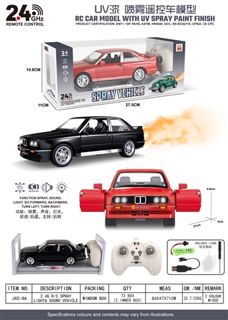
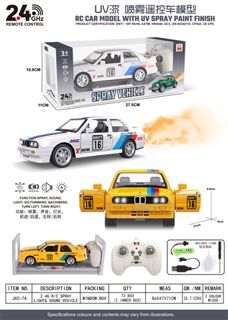
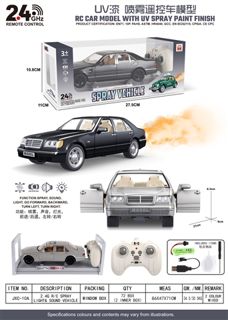
A catalogue line is a starting point, not a result. Take one example from our own RC stunt car listings: the 2.4GHz 7-Channel Beetle RC Car with Lights, Sound and Spray carries a reference price of 5.01 USD and a catalogue record only. That record explicitly does not establish certification, age suitability, stock, or factory capacity; material, packing, MOQ and carton data are recorded as not recorded, and the same applies to sample, current quote, age evidence and destination documents. If a listing cannot produce a finished-part paint report on request, it is not a shortlist candidate for the US or EU market, regardless of who published it.
FAQ
Does the 2008 OKK recall identify a specific SKU or model number?
No. The CPSC notice provides no model, item or SKU number. The traceable identifiers are the product description (CarToySupplier racing car with four additional tires and one remote control), the packaging text "Formula 1", the sales window of October 2007 through November 2007, the dollar/discount store channel, and the roughly $1 price point.
Does this recall mean OKK Trading or its suppliers are currently non-compliant?
No. It is a historical external recall dated January 23, 2008, announced voluntarily in cooperation with CPSC. It establishes nothing about current suppliers, current inventory, or current compliance status, and should not be used as a risk signal about any factory today.
What was the actual hazard in recall 08-172?
Surface paint on CarToySupplier cars contained excessive levels of lead, violating the federal lead paint standard. The notice reports no incidents or injuries. The hazard is tied to the painted surface of the car — not to the tires, the remote control, or the packaging.
Which documents should an importer collect to prove paint compliance on RC cars?
A third-party test report on the finished painted part against the destination market's lead-in-paint limit, the paint supplier's batch documentation, incoming-coating inspection records, and packaging artwork approval. A report covering only raw material or a generic product family does not close the gap.
Can recalled inventory be resold?
No. According to the CPSC notice, it is illegal to resell or attempt to resell a recalled consumer product, and the remedy was for consumers to return the car to the place of purchase for a refund. Any remaining stock of the exact recalled configuration should be removed from sale, not discounted.
What should a recall clause in a purchase contract cover?
Batch traceability from carton and date code back to a production run, a defined process for isolating an affected batch, and allocation of retrieval or recall costs. If the supplier cannot tie packaging text and date codes to a specific run, the clause has nothing to operate on.
Sources
Request a quote or a factory audit
If you are sourcing RC cars and need the finished-part paint evidence, packaging artwork and batch records before you place a deposit, ask for them in writing first. We will quote on the configuration you specify and tell you plainly which documents we can produce and which we cannot — the same standard this article asks you to apply to any factory in Chenghai, Shantou or Yiwu.