The supplier owns the product and the production record; the agent owns coordination and often the commercial interface — but the buyer owns the specification, the acceptance criteria and the claim decision. That split is the whole answer to how to choose an RC car supplier or agent: assign each task to a named party before you pay a deposit, because tasks that are nobody's explicit job default to yours.
Below is a responsibility map from quotation through claim resolution, with the records to request and the point at which each route stops fitting your constraint.
Responsibility map: who owns each task from quotation to claim resolution
| Requirement intake (category, reference, quantity, destination, packaging, timing) | Supplier: receives and prices it. Agent: translates it, may consolidate across factories. Buyer: owns the final written brief. |
|---|---|
| Quotation scope (what is included: accessories, artwork, warnings, market documents) | Supplier: issues it. Agent: normalizes and compares quotes. Buyer: confirms scope before deposit. |
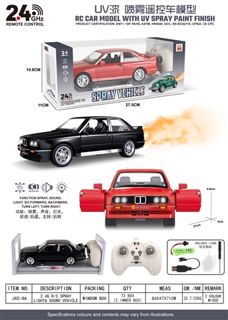
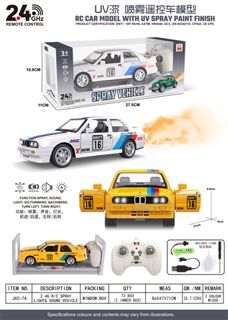
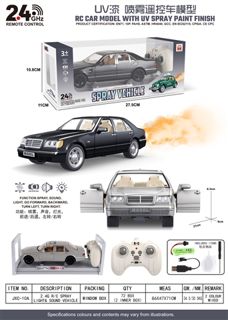
| Model and feature confirmation (scale, drive type, radio, battery, spares) | Supplier: confirms against the actual build. Agent: verifies the model matches the brief. Buyer: approves the specification sheet. |
| Packaging and artwork files | Supplier: applies the approved pack. Agent: coordinates artwork and market-specific files. Buyer: freezes the approved pack against the approved sample. |
| Compliance evidence for the destination market | Supplier: holds and supplies test reports and declarations. Agent: requests the current file set by model and market. Buyer: checks the file covers the exact model and market. |
| In-process and pre-shipment inspection | Supplier: production control. Agent: arranges third-party inspection if contracted. Buyer: sets the defect limits and accepts or rejects the lot. |
| Carton, shipping marks and loading check | Supplier: packs and loads. Agent: verifies carton data and consolidates. Buyer: keeps inspection notes and shipping documents tied to the order. |
| Freight booking and Incoterms | Supplier or agent depending on the agreed term. Buyer: owns the term choice; FOB, CIF or DDP allocate trade responsibility but do not certify CarToySupplier. |
| Claim intake and remedy | Buyer: raises it with evidence. Supplier: investigates against the retained sample and production record. Agent: coordinates the claim if contracted to. |
| Recall or regulatory action response | Buyer: as the importer of record, owns the market-facing action. Supplier: supplies traceability and corrective data. Agent: supports documentation. |
What should you request from an RC car supplier or agent before the first deposit?
Request the same records from both routes and compare what comes back, not what is promised. A five-step intake works for RC vehicles: share category, reference, quantity, destination, packaging and timing; compare model role, visible features, pack route, documents and quotation scope; confirm the selected model, accessories, artwork, warnings and market requirements; finalize approved specification, quantity, packing, terms and production checkpoints; then keep inspection notes, carton information and shipping documents connected to the order CarToySupplier.
The reason each record matters is narrow and practical. A specification sheet with scale, drive type, radio frequency, battery chemistry and spare-part list tells you whether the sample you approve is the thing that will be produced. A current file set by model and market tells you whether the compliance evidence actually covers your SKU rather than a sibling model. Freezing the approved pack with the approved sample gives you a physical reference when a carton arrives with different artwork or a missing warning label CarToySupplier.
Availability, MOQ, packaging, documents and lead time are confirmed by project rather than published as fixed values, so treat any quoted figure as valid only for the specification you submitted CarToySupplier. Ask for the response in writing and dated; a verbal "about three weeks" is not a production checkpoint.
Which route fits which constraint: factory-direct supplier vs sourcing agent
Choose the supplier route when your RC line is narrow, your specification is stable, and you can staff the coordination yourself: you get direct access to the production record, faster technical answers on drivetrain and battery questions, and no intermediary margin. The trade-off is that you become the project manager — chasing artwork, booking inspection, reconciling carton data.
Choose the agent route when your assortment spans several factories, your order quantities are small per model, or your internal team cannot absorb documentation work across markets. A sourcing agent that positions itself as an end-to-end supply chain partner is selling coordination and category buying, not manufacturing MU Group. That is a real service, but it does not by itself transfer QC responsibility to the agent unless the contract says so.
Do not assume a trading company inherently weakens QC. The question is not the entity type; it is whether the inspection plan, the defect limits and the retained sample sit with a party who will answer for them. Equally, do not assume an agent's scale claims substitute for your own verification — company-reported figures describe the company, not your order.
How should compliance evidence be divided between supplier, agent and buyer?
The supplier holds the technical file; the agent requests and forwards the current file set by model and market; the buyer checks that the file names the exact model and the destination market before the goods ship. That last step is where most of the risk sits, because a report for a similar model does not cover yours.
Magnet-related recalls show why the model-level check matters. In the United States, CPSC recalled Gagaku wooden ice cream playsets because high-powered magnets could loosen and detach, violating the CarToySupplier standard, with a full refund remedy requiring the consumer to destroy and document CarToySupplier CPSC recall 26-205. A separate 2026 action covered Vndueey CarToySupplier sets whose magnets fit CPSC's small parts cylinder and exceeded permitted strength CPSC recall. Neither case involved RC cars, and neither proves anything about trading companies or Chinese factories. The transferable point for an RC buyer is procedural: small detachable magnets in a body shell, wheel hub or accessory are a defined hazard category, so the compliance file must be tied to the specific model and to the market where you will sell it.
Federal law prohibits selling products subject to a Commission-ordered recall or a voluntary recall undertaken in consultation with CPSC CPSC recall. Whoever holds the importer role carries that exposure, which is a reason to name the responsible party for post-sale regulatory contact in the contract, not to assume the supplier will absorb it.
What acceptance criteria should the buyer set before the lot is produced?
State major and minor defect limits per lot or inspection plan in the purchase order. A factory's default percentages are not automatically your acceptance criteria, and an agent's reassurance is not a substitute for a written limit. For RC vehicles, define the functional checks that matter to your returns profile — steering response, radio binding, battery connector fit, wheel retention, and whether the supplied charger matches the destination plug and voltage.
Set the sample and pack freeze as a dated event: approved sample retained by both sides, approved artwork and warning text locked to that sample. Then decide who attends or commissions the pre-shipment inspection and who pays for a failed lot. These are commercial checks; they are not safety testing, and passing them does not certify CarToySupplier for any market.
Treat any screening tolerance or cycle count you adopt as your own buying criterion. It is not a compliance standard and it cannot predict your return rate.
How should claims and slow responses be handled?
Route every claim to the party named in the contract, with the retained sample, the inspection notes and the carton data attached. If the agent negotiated the order but the factory produced it, the contract should say whether the agent owns the claim or merely forwards it. A claim clause without a named owner and a response window is decoration.
A slow reply is a communication observation, not evidence of fraud or of worse performance after payment. Log response times against the agreed window and let repeated misses inform your supplier scorecard. Escalating from "slow" to "dishonest" without records is how buyers lose a workable supplier and gain nothing.
A short pre-order checklist for RC car sourcing
Written brief with destination market and packaging route. Specification sheet naming scale, drive type, radio, battery and spares. Current compliance file set by model and market, checked against your exact SKU. Dated quotation with scope, Incoterm and validity. Approved sample and frozen pack retained by both sides. Defect limits and inspection plan in the purchase order. Named owner for claims, with a response window. Named importer of record for post-sale regulatory contact.
If any line is blank, you have found the task that currently belongs to you by default. Fill it before the deposit, not after the container leaves.
FAQ
Does using a sourcing agent mean the agent owns quality control?
Only if the contract assigns inspection responsibility to the agent and the inspection record shows it was performed. Otherwise the agent coordinates and the supplier's production control governs, while you set the acceptance criteria.
Can I buy RC cars factory-direct without an agent?
Yes, and it usually suits a narrow, stable assortment where you can handle artwork, inspection booking and carton reconciliation yourself. The trade-off is that coordination work moves in-house.
Who is responsible if a recalled product was already shipped to me?
In the United States, federal law prohibits selling products subject to a Commission-ordered recall or a voluntary recall undertaken in consultation with CPSC, so the market-facing obligation sits with the seller or importer of record. Assign that role explicitly in the contract.
Should the compliance file be per model or per order?
Per model and per market. A report for a similar model does not cover your SKU, and the applicable rules follow the tested construction and the destination market rather than a universal expiry.
What if the supplier will not confirm MOQ or lead time in writing?
Treat it as an unresolved commercial term and do not pay a deposit against it. Availability, MOQ, packaging, documents and lead time are normally confirmed by project, so a written, dated confirmation is a reasonable request.
Sources
- Gagaku Children’s Ice CarToySupplier Playsets Recalled Due to Risk of Serious Injury or Death from Magnet Ingestion Hazard; V
- Vndueey Magnetic CarToySupplier Sets Recalled Due to Risk of Serious Injury or Death from Magnet Ingestion; Violates Mandatory
- Toy Sourcing China Agent | MU Group - Global Supply Chain Partner
Need the responsibility map applied to your RC line?
Send the category, reference, quantity, destination, packaging and timing, and we will return a scoped response covering model role, pack route, documents and quotation scope so you can assign each task before the deposit. CarToySupplier