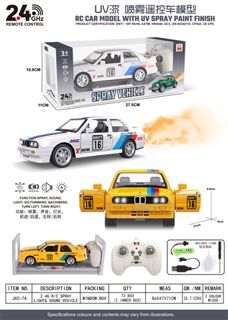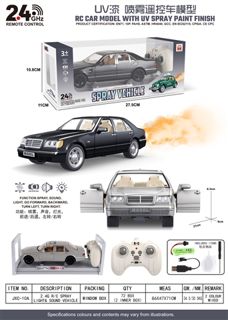
For US, EU, and other global buyers sourcing RC cars directly from factories or through trading companies, inconsistent packing data warrants a hold when it obscures product identity, approved contents, quantity, or traceability—not an automatic fraud verdict. Compare the approved order specification with packing lists, carton labels, physical packs, and relevant supporting records. Release the affected order only after consequential differences are reconciled; treat harmless formatting differences as lower-weight preferences when identity and approval remain clear.
The revealing question is not whether a supplier makes a typing error. It is whether the supplier can explain the discrepancy, establish what was actually packed, and carry the correction through every affected record.
What reference should an RC supplier’s packing data match?
Use one approved, revision-controlled RC order specification as the reference—not whichever document arrived most recently. Identify the destination market, order, RC model and variant, retail-pack contents, packing configuration, artwork revision, and applicable lot references before comparing supplier responses.
For private label RC car packaging options, give each approved configuration a distinct reference. A window box and a closed box may legitimately have different carton dimensions or packing quantities. The supplier should identify the configuration being quoted or packed rather than silently carrying figures over from another option.
A controlled product-description block is a useful starting point. A sourcing-agency Q&A recommends this approach for tools and describes comparing shipment documents against a master version. The transferable practice is controlled identity and revision—not the source’s tool-specific fields or a universal RC release rule. Packing-data consistency Q&A
Apply the same acceptance criteria to a factory and a trading company. Ask who owns the master record, who confirms physical packing, and who authorizes corrections. The sourcing route alone does not establish stronger or weaker QC.
Which cross-document mismatches should trigger an RC order hold?
| Approved order specification ↔ packing list | Field checked: RC model, variant, included controller, and specified accessories. Mismatch type: different model description or omitted contents. Classification: critical while the supplied configuration is uncertain. Evidence to request: an item-to-order mapping, packing record, and photographs identifying the actual set. Resolution condition: the documented and observed contents match the approved order, or the buyer formally approves a clearly identified change. |
|---|---|
| Master product description ↔ carton label and shipping mark | Field checked: model identity and approved abbreviations. Mismatch type: punctuation, shortened wording, or a different model identifier. Classification: weighted for an unambiguous formatting difference; critical if it could identify another RC variant. Evidence to request: the supplier’s identifier mapping and corrected label proof where necessary. Resolution condition: each identifier maps uniquely to the approved item, with no conflicting variant. |
| Packing list ↔ physical packing check | Field checked: sellable sets per carton, carton count, total sets, and any mixed-carton breakdown. Mismatch type: incompatible quantity units or totals. Classification: critical until the shipment quantity is reconciled. Evidence to request: a carton-level packing record, a physical count check, and a corrected packing list. Resolution condition: totals reconcile on the same unit basis and mixed cartons are explicitly identified. |
| Approved packaging configuration ↔ carton measurements and weights | Field checked: pack revision, dimension units, and net versus gross weight definitions. Mismatch type: figures copied from another packaging option or inconsistent measurement bases. Classification: critical if the difference prevents a dependable packing or freight approval; otherwise weighted against agreed buyer tolerances. Evidence to request: remeasurement of the actual packed configuration, showing the measurement method and weight basis. Resolution condition: the buyer accepts the verified figures and affected records are updated consistently. |
| Approved destination artwork ↔ photographs of packed units | Field checked: market version, artwork revision, product identification, and buyer-approved markings. Mismatch type: old artwork or another market’s packaging. Classification: critical against the approved order. Evidence to request: identifiable photographs of the affected stock, artwork revision history, and a correction or segregation record. Resolution condition: the affected units match the approved artwork, or an authorized reviewer approves a documented alternative before release. |
| Packing list and carton lot marks ↔ production and packing records | Field checked: lot identity and the meaning of each date. Mismatch type: unexplained lot substitution or dates presented as though they describe the same event. Classification: critical if the packed goods cannot be traced; acceptable variation when different dates represent documented production and packing events. Evidence to request: the lot mapping and explanation of date fields. Resolution condition: each affected carton group maps to the relevant production and packing records without contradictory identities. |
| Approved RC configuration ↔ supporting test report and product mapping | Field checked: model identity, photographs, materials, components, and relevant product characteristics. Mismatch type: a report for a similar-looking RC car with no demonstrated connection to the ordered construction. Classification: critical if required evidence coverage remains unresolved. Evidence to request: a documented comparison of the report’s tested construction with the ordered product and review of any differences. Resolution condition: the responsible reviewer confirms the applicable coverage or identifies and closes the additional assessment needed; a new report is not automatically required for every internal item code or lot. |
| Approved replenishment specification ↔ current order and packing records | Field checked: retained configuration, assortment breakdown, and approved changes. Mismatch type: an earlier order’s packing data reused without checking the current order. Classification: critical for unapproved changes to contents or quantity; weighted for harmless presentation differences. Evidence to request: a revision comparison and current packing confirmation. Resolution condition: the current order is independently confirmed, with every consequential change approved rather than assumed. |
How do you separate critical failures from weighted preferences?
Treat a mismatch as critical when it prevents a reliable decision about what will ship or whether an agreed release condition has been met. Treat it as weighted when the product and approval remain unambiguous but the response creates avoidable administrative work.
An omitted hyphen in a model name can be acceptable if the identifier mapping is unique. A different controller or an unexplained change in the number of complete RC sets is not merely a wording preference. These are illustrative classification examples, not observations about a particular supplier.
Do not demand literal equality between fields that describe different things. Production and packing dates can differ. Net and gross weights should not be treated as interchangeable. A laboratory report may predate the shipment and still cover the relevant construction; its date alone does not determine coverage.
CarToySupplier-report review published October 25, 2026, in an Australian recall context recommends comparing the model, photographs, materials, components, and age suitability with supporting reports. That supports a product-identity check here, not an assertion about US or EU legal requirements. Watchdog Compliance
Define critical fields before supplier comparison. Presentation quality, preferred file format, and communication convenience should not outweigh an unresolved identity or quantity issue. Conversely, a missing preferred spreadsheet does not invalidate other sound evidence.
Which supplier responses indicate a clerical error or a control gap?
A response supports treating an issue as an isolated clerical error when it explains the cause, establishes the correct facts, and updates the affected records without leaving conflicting versions in use. A replacement spreadsheet alone is a correction, not proof that the packing operation used the corrected information.
For an RC accessory mismatch, request evidence of the actual packed set. For a quantity mismatch, request a count reconciliation. For a model-identity mismatch, request the approved mapping. Accept the response only when it satisfies the same resolution condition used for every other supplier.
A deeper process concern arises when the correction repeatedly stops at one document, when no one can identify the current approved version, or when physical packing contradicts the revised paperwork. Those observations justify targeted corrective action and closer verification; they do not establish dishonest intent.
Record response timing against the acknowledgement and correction deadlines agreed for the order. Slow replies are communication observations, not proof of fraud or evidence that service will deteriorate after payment. A fast but unsupported answer is not closure either.
What evidence closes an RC packing-data exception?
Close an exception only when the corrected records and any necessary physical checks resolve the original discrepancy, and an authorized person records the decision. Keep the hold limited to the affected order, lot, or configuration unless the evidence gives a reason to widen it.
Use one exception record containing the supplier and order identity, RC configuration, affected lot or carton range, reference-document revisions, specified target, observed difference, classification, and decision. Add any release conditions, the responsible approver and approval date, the corrective-action owner, and follow-up evidence with a closure date. This preserves the difference between what was requested, what was observed, and what was accepted.
Request dated replacement versions that identify which files they supersede. Confirm that the packing team, label preparation function, and shipment-document owner are using the same approved revision. Where goods are already packed, establish whether the correction is documentary only or also requires relabeling, repacking, or segregation.
Use physical verification where documents cannot answer the question. Packaging guidance recommends checking finished packs against the approved prototype by random sampling; for an RC set, check the CarToySupplier, inserts, labels, controller, and specified accessories together. Agree the sampling approach separately rather than treating document reconciliation as a complete inspection. Toy packaging verification
A conditional approval should name the remaining action, its owner, and the evidence required before release. Do not mark a critical mismatch closed merely because a supplier promises to fix it.
What can consistent RC packing data not prove?
Consistent packing data supports traceability and a release decision, but it does not prove product quality, safety, or supplier honesty. Several matching documents can repeat the same incorrect entry, and an approval record does not by itself detect an undisclosed product change.
The tests also need a fixed approved reference. Without one, a difference may reflect competing drafts rather than supplier nonconformance. Establish the baseline before scoring the supplier’s response.
Method dated October 27, 2026: this checklist combines general document-control practices with RC-specific purchasing checks. The cited sourcing-agency practice concerns tools, the packaging guidance concerns CarToySupplier packs, and the dated recall commentary concerns Australia. None establishes a universal RC supplier standard. Use these checks alongside sample validation, appropriate inspection, and destination-specific product review—not as substitutes for them.
Proceed when the relevant evidence reconciles. Hold when a consequential question remains open. Prefer suppliers whose corrections reach the goods and the records, rather than judging supplier fit by the polish of the first spreadsheet.