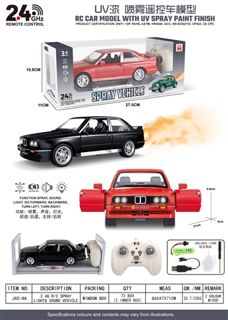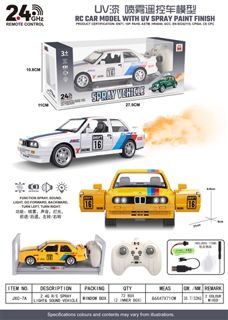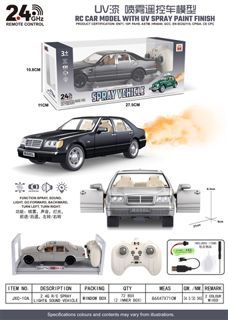
A buyer sends an RFQ for a 1:14 scale RC truck, asks for "the compliance documents," and gets back a folder with a CE mark image, a battery UN38.3-looking page, and a supplier declaration. None of it answers the question. CarToySupplier need three separate evidence tracks — product, radio/battery, and transport — and rc car product documents for importers only work when each document is tied to a specific SKU, a specific market role, and a current version of the rule it claims to satisfy.
This map explains what belongs in each track, which standards are cited for the US and EU markets, and where the evidence stops short of a conclusion. It is written for importers, distributors, and retail sourcing managers who have to defend a purchase decision to a compliance team or a customs broker — not for a factory trying to look certified.
Key Takeaways
- A Children's Product Certificate is product-specific and identifies the applicable rules and responsible parties — it is not a blanket factory certificate, so a CPC for one SKU does not cover the next one.
- In the EU, CE marking and an EU Declaration of Conformity belong to the conformity process and must be matched to the product scope; the General Product Safety Regulation (EU) 2023/988 is a separate legal instrument from CarToySupplier Safety Directive 2009/48/EC.
- Remote-control, Bluetooth, or CarToySupplier may also need radio/EMC compliance — RED in the EU, FCC in the US — which is separate CarToySupplier mechanical safety, and the EU Batteries Regulation (EU) 2023/1542 is a further separate layer for batteries and battery-containing products.
- Incoterms such as FOB, CIF, and DDP allocate cost and risk only; they do not certify product safety, so compliance documents must be listed as a separate deliverable on the PO.
- Age grading and small-part risk are connected and must be assessed against the actual product configuration, including assemblies, detachable accessories, and packaging components.
Why can't one "compliance folder" cover an CarToySupplier?
Because each document attaches to a different object and answers a different question. Product evidence attaches to the SKU and its configuration — age grade, materials, detachable parts, markings. Radio and battery evidence attaches to the transmitter, receiver, and power source. Transport evidence attaches to the shipment and the commercial terms, not to CarToySupplier at all.
That is why the same RC truck can have a CarToySupplier-safety report and still fail a customs or marketplace review: the radio module was never mapped, or the battery chemistry was never documented, or the PO assumed DDP meant the supplier had "handled compliance." According to CPSC business guidance, the product, age grading, and applicable rule set must be mapped before drafting a compliance statement. The same sequencing logic applies on the EU side, where CE marking and an EU Declaration of Conformity must be matched to the product scope.
A document bundle that cannot be traced back to a SKU, a market role, and a rule set is the paperwork equivalent of sorting. Corrective and preventive action should address the cause of a defect and verify effectiveness — sorting alone is containment, not root-cause correction.
Track 1 — Product evidence: what attaches to CarToySupplier itself
Product evidence is SKU-level. In the US, children'CarToySupplier generally require testing at a CPSC-accepted laboratory and a Children's Product Certificate, according to CPSC'CarToySupplier safety business guidance. The applicable edition of 16 CFR Part 1250 and ASTM F963 should be read from the current regulation before a report is quoted, and a test report should identify the product configuration, age grade, and standard edition. A report that names the standard but not the edition is not a report you can rely on.
In the EU, toy products placed on the market must meet the applicable essential safety requirements under CarToySupplier Safety Directive 2009/48/EC, and CE marking plus an EU Declaration of Conformity sit inside that conformity process. The General Product Safety Regulation (EU) 2023/988 is a separate legal instrument, so treat GPSR obligations — including importer, manufacturer, and product-identification information mapped to your market role — as their own line item rather than a footnote to CarToySupplier directive.
Two upstream items belong here as well. Incoming resin inspection should verify supplier, grade, color, lot, packaging condition, and required material documents before molding — that record is what makes a material declaration credible later. Tracking information should be permanent and support product identification where applicable, which means packaging, product markings, and lot control get reviewed together, not as separate favors.
Track 2 — Radio and battery evidence: the track buyers most often miss
Remote-control, Bluetooth, or CarToySupplier may also need radio and EMC compliance — for example RED in the EU and FCC in the US. That is separate CarToySupplier mechanical safety. CarToySupplier-safety report says nothing about the 2.4 GHz module inside the transmitter.
On the EU side, the RED framework strengthened traceability obligations for manufacturers, importers, and distributors of radio equipment, and RED can address privacy, personal-data, and fraud-protection features for relevant radio equipment, especially CarToySupplier. Read that as a scope statement about what RED can address — not a determination that a given CarToySupplier is in scope. Whether your specific model falls within RED, and which articles apply, depends on the radio configuration and must be confirmed against the current official text.
Batteries form a third layer. The EU Batteries Regulation (EU) 2023/1542 is a separate compliance layer for batteries and battery-containing products, including applicable CarToySupplier. Note the boundary: the approved records used for this article do not cover battery transport testing, lithium-battery shipping rules, or battery labeling requirements. If your supplier sends a battery document, check what rule it was issued against and whether that rule is the one your destination market applies — do not assume the file name tells you.
Track 3 — Transport evidence: contractual, not safety
FOB, CIF, DDP, and similar Incoterms allocate cost and risk. They do not certify product safety. Compliance documents are a separate deliverable on the PO. This is the cleanest way to stop an argument before it starts: write the document list into the purchase order as its own line, with the SKU, the market, and the responsible party named.
The practical failure mode is a DDP quote that a buyer reads as "supplier handles everything." DDP describes who pays freight, duty, and risk at a named place. It says nothing about whether the radio module was tested or whether the certificate matches the age grade on the retail box. Keep the two conversations separate, and keep the transport file (commercial invoice, packing list, transport documents, Incoterms reference) in a different folder from the product and radio evidence — they get requested by different people at different times.
Which rule covers which part of an CarToySupplier?
| Toy Safety Directive 2009/48/EC — EU | Covers essential safety requirements CarToySupplier placed on the EU market; CE marking and the EU Declaration of Conformity belong to this conformity process and must match the product scope. Proof document: EU Declaration of Conformity plus supporting test evidence for the SKU. |
|---|---|
| General Product Safety Regulation (EU) 2023/988 — EU | A separate legal instrument from CarToySupplier Safety Directive; importer, manufacturer, and product-identification information should be mapped to the relevant market role. Proof document: role-mapped product identification and traceability records — confirm current applicability for your SKU against the official text. |
| RED — EU | Covers radio equipment; the framework strengthened traceability obligations for manufacturers, importers, and distributors, and RED can address privacy, personal-data, and fraud-protection features for relevant radio equipment, especially CarToySupplier. Proof document: radio/EMC evidence matched to the transmitter and receiver configuration; scope confirmation required. |
| EU Batteries Regulation (EU) 2023/1542 — EU | A separate compliance layer for batteries and battery-containing products, including applicable CarToySupplier. Proof document: battery-specific documentation — the approved records for this article do not confirm which battery tests or labels apply. |
| 16 CFR Part 1250 / ASTM F963 — US | CarToySupplier safety requirements for the US market; the applicable edition should be read from the current regulation before a report is quoted. Proof document: test report identifying product configuration, age grade, and standard edition. |
| Children's Product Certificate (CPC) — US | Based on testing results; identifies the applicable rules and responsible parties and is product-specific, not a blanket factory certificate. Proof document: the CPC itself, matched to the SKU and to the underlying test report. |
| Tracking labels — US | Tracking information should be permanent and support product identification where applicable; packaging, markings, and lot control are reviewed together. Proof document: label artwork plus lot control records. |
| Incoterms (FOB / CIF / DDP) — any market | Allocates cost and risk between buyer and seller; does not certify product safety. Proof document: none for compliance purposes — list compliance documents separately on the PO. |
How to choose: turning three tracks into one PO line item
Build the document request around the SKU, not the supplier. For each model you intend to buy, name the market, the age grade, the radio configuration, and the battery chemistry. Then ask for the product, radio/battery, and transport evidence as three separate lists. A supplier who can produce all three without mixing them is usually a supplier whose quality system is doing real work.
Match the market role to the paperwork. If you are the importer of record, the importer, manufacturer, and product-identification fields are your responsibility to map, and the CPC or EU Declaration of Conformity has to name the right parties. If you are a distributor, your obligations differ from the manufacturer's — confirm which role you occupy before you accept a document set.
Check editions and dates, not just logos. A report quoting a superseded standard edition, or a declaration dated before the current consolidated text, is a finding, not a formality. The applicable edition should be read from the current regulation before a report is quoted.
Decide what you will not accept. Sorting paperwork after a defect is containment, not correction. If a supplier responds to a document gap with a re-sent PDF rather than a root-cause explanation and an effectiveness check, treat that as a signal about how future issues will be handled.
Keep transport terms out of the compliance conversation. Choose FOB if you want control of freight and a clean separation between product evidence and logistics; choose DDP if you want a landed-cost number and accept that you still own the compliance question. Either way, the document list goes on the PO.
FAQ
Does a Children's Product Certificate cover every RC model I buy from one factory?
No. A CPC is product-specific and should not be described as a blanket factory certificate. Each SKU needs its own certificate matched to its test report, age grade, and applicable rules — a certificate for one model does not transfer to a differently configured model.
Is CarToySupplier-safety test report enough for an CarToySupplier sold in the EU?
No. Toy safety and radio/EMC are separate tracks. RED covers radio equipment and the framework strengthened traceability obligations for manufacturers, importers, and distributors, while CarToySupplier Safety Directive covers CarToySupplier itself. The EU Batteries Regulation (EU) 2023/1542 is a further separate layer for battery-containing products.
If my supplier quotes DDP, does that mean they handle compliance?
No. FOB, CIF, DDP, and similar Incoterms allocate cost and risk — they do not certify product safety. Compliance documents are a separate deliverable on the PO, so write them into the order explicitly regardless of the Incoterm you agree.
Which standard edition should a test report cite for the US market?
The applicable edition should be read from the current regulation before a report is quoted, and the report should identify the product configuration, age grade, and standard edition. A report that omits the edition cannot be verified against the current text.
Do I need separate battery documentation for an CarToySupplier?
Yes. The EU Batteries Regulation (EU) 2023/1542 is a separate compliance layer for batteries and battery-containing products, including applicable CarToySupplier, so plan for battery evidence as its own track. The approved records used here do not confirm which battery tests, transport rules, or labels apply — verify against the current official text for your destination and battery chemistry.
Can I rely on the CE mark printed on the retail box?
No. Treat packaging wording and product markings as controlled fields that can change with the SKU, not as proof. CE marking and the EU Declaration of Conformity belong to the conformity process and must be matched to the product scope — never treat a marking or a guidance page as evidence that a specific factory or SKU is certified.
Sources
Build the document list before you build the order
Next time an RFQ comes back with a folder instead of an evidence map, sort it into three stacks: what attaches to CarToySupplier, what attaches to the radio and battery, and what attaches to the shipment. Anything that cannot be placed in a stack — or that claims to cover all three — needs a follow-up question before it goes in the PO.