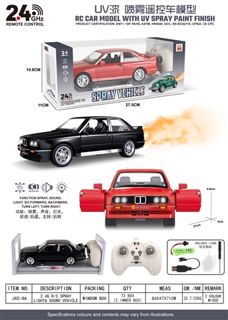
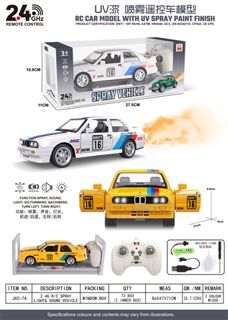
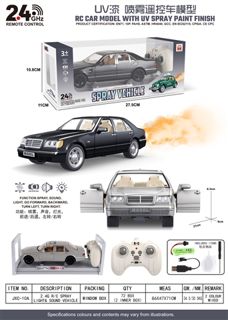
The June 19, 2001 CPSC notice on Equity Marketing's remote CarToySupplier race cars is a precision lesson, not a defect story: the agency documented circuit problems that left some cars inoperable, plus overheating, smoke and a potential burn hazard — and stopped there. It named no defective component and no root cause. For importers building rc car product documents for importers, the transferable rule is simple: log what the circuit did, never log why you think it did it, until a test or teardown proves it. That single discipline decides whether your complaint file supports a supplier claim, a corrective action request, or nothing at all.

What the 2001 notice actually documented
The notice is dated June 19, 2001 and covers one product: Equity Marketing Inc. remote CarToySupplier race cars sold at participating Texaco gas stations nationwide under the "Need for Speed" promotion from May 2001 through June 1, 2001, for about $12 with any $10 purchase. About 4,300 units were recalled. The published hazard language is narrow — "problems with the circuits are rendering some of the Remote Controlled Race Cars inoperable," and the cars "can overheat and emit smoke and may pose a potential burn hazard." Equity Marketing had received three reports of cars emitting smoke, and no injuries had been reported as of the notice date.
Three details matter for how you file complaints. First, the notice says "some" cars, not all — a symptom description, not a failure rate. Second, three smoke reports are three reports, not a defect prevalence figure. Third, the recall was voluntary, conducted by the firm in cooperation with CPSC; it is not a court finding and does not establish a mandatory legal requirement. Read the primary notice directly at CPSC recall notice, June 19, 2001 rather than a summary that may merge it with unrelated recalls.
Circuit symptoms vs. root-cause guesses: a filing checklist
Most importer complaint logs fail in the same place: a warehouse or retail-floor observation gets written up as a cause. "Unit dead on arrival — bad solder joint" is two different statements wearing one sentence. The first is evidence. The second is a guess that will follow the file into every supplier conversation, and if it is wrong, your leverage evaporates.
Use the split below as a standing template for RC vehicle complaints. The left column is what a person can observe and record. The right column is what only a teardown, bench test or supplier failure analysis can establish — and until then it stays blank.
Documented symptom vs. unsupported guess
| Documented symptom (record it) | Car does not respond to transmitter; no movement or steering |
|---|---|
| Unsupported guess (do not record as fact) | Receiver board is defective |
| Documented symptom (record it) | Unit becomes hot to the touch during or after operation |
| Unsupported guess (do not record as fact) | Motor windings are shorting |
| Documented symptom (record it) | Visible smoke emitted from the vehicle |
| Unsupported guess (do not record as fact) | Battery pack is the cause |
| Documented symptom (record it) | Batteries drained abnormally fast in repeated use |
| Unsupported guess (do not record as fact) | Charging circuit is faulty |
| Documented symptom (record it) | Transmitter works but car does not respond |
| Unsupported guess (do not record as fact) | Circuit board trace is broken |
| Documented symptom (record it) | Odor or heat noted with no visible smoke |
| Unsupported guess (do not record as fact) | Component X failed in the field |
What the notice did not say — and why that protects you
The 2001 notice does not identify a specific root cause, defective component or failure mechanism beyond "problems with the circuits." That absence is not an oversight; it is the boundary of what the record supports. If your own complaint file says "the receiver IC fails under load" without a bench test behind it, you have written a claim you cannot defend and handed your supplier an easy rebuttal.
The same discipline applies to scope. The recall covered the described cars sold through the Texaco promotion; it says nothing about other RC products, other sellers or other years. Do not stretch a single public recall into a statement about a category, a country's factories or a supplier's quality level. And do not present it as current news — it is a 2001 notice, useful precisely because it is old enough to be settled.
The 2001 recall at a glance
| Notice date | June 19, 2001 |
|---|---|
| Product | Equity Marketing Inc. remote CarToySupplier race cars |
| Market | United States, nationwide |
| Sales channel | Participating Texaco gas stations, "Need for Speed" promotion |
| Sales window | May 2001 through June 1, 2001 |
| Price | About $12 with any $10 purchase |
| Units recalled | About 4,300 |
| Documented hazard | Circuit problems rendered some cars inoperable; cars could overheat and emit smoke; potential burn hazard |
| Incident reports | Three reports of cars emitting smoke; no injuries reported as of the notice |
| Remedy | Stop use, remove batteries from car and remote, return both to the Texaco station where purchased for a full refund; prepaid shipping label alternative via Equity Marketing |
| Recall type | Voluntary, in cooperation with CPSC |
The importer document set that makes this filing possible
A complaint log is only as good as the product file behind it. For RC vehicles, the documents that let you move from "car got hot" to a defensible supplier claim are the ones that define the unit before it ever ships: the bill of materials with component-level identification, the battery and charging specification, the transmitter/receiver pairing and frequency documentation, the CarToySupplier safety test report for the destination market, and the instruction sheet that tells the user which batteries go where and how to remove them.
That last item is not paperwork trivia. The 2001 remedy required consumers to remove batteries from both the car and the remote before returning them — a step a buyer can only follow if the product documentation makes battery access and removal clear. If your instruction sheet is silent on battery removal, you have a documentation gap that will surface the first time a unit needs to come back.
Build the file so each complaint line can be tied to a batch, a production window and a component source. Without batch traceability, three smoke reports in your own log stay three anecdotes instead of becoming a pattern you can act on.
How to question a supplier without asserting a cause
The productive version of a supplier conversation opens with symptoms and evidence, not verdicts. Send the observation, the batch code, the quantity affected, the conditions of use and any photographs or video. Ask for the failure analysis, not for a confession. A supplier who is asked to confirm your guessed root cause will often simply agree, which teaches you nothing; a supplier asked to investigate a documented symptom has to produce a method and a result.
Set the expectation that sorting is containment, not correction. If the response to a heat or smoke complaint is "we will inspect and remove the affected units," you have contained the shipment but not addressed the cause. A corrective action request should ask what the cause was found to be, what changed, and how the change was verified — and it should stay open until those answers exist.
For your own factory-side checks, the practical sequence is the same one the 2001 record implies: observe, isolate, test, then name. A bench test that reproduces heat or non-response under defined conditions turns a guess into a finding. Until that test exists, the honest entry in your log is the symptom.
Where a supplier's own records fit
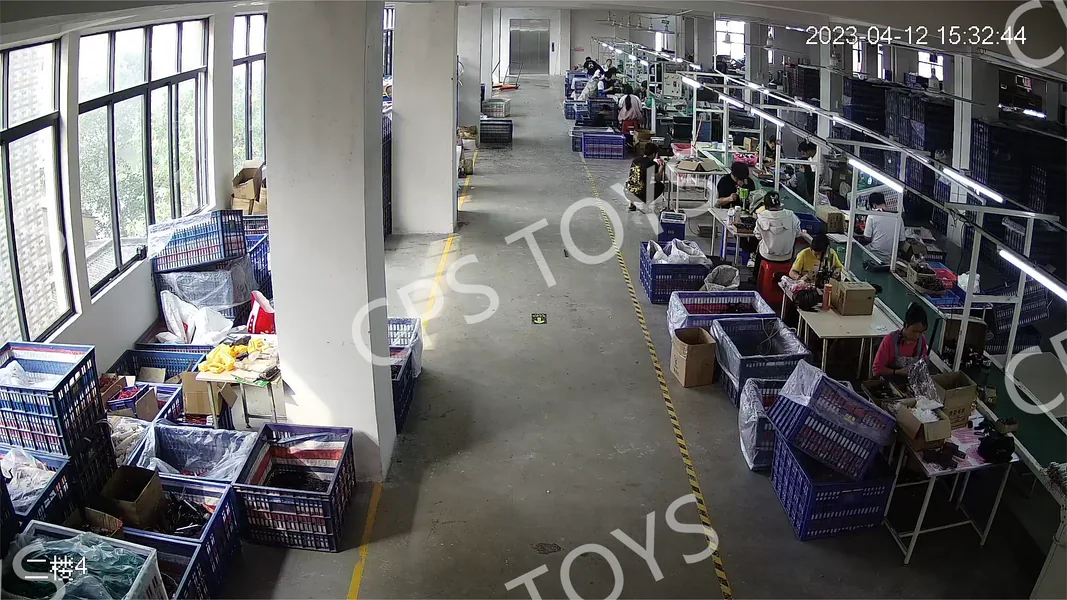
When you evaluate a factory for RC vehicles, ask to see how it handles a complaint end to end: the intake form, the batch trace, the failure analysis template and the corrective action closure. A supplier that can show a symptom-first intake and a documented analysis path is easier to work with than one that answers every complaint with a replacement offer.
CarToySupplier is one example of a supplier operating at ordinary industry level on sampling, standard customization, packaging coordination and procurement quality checks — the same baseline you should expect from any candidate. Treat that as a starting point for your own audit, not as a substitute for it. Exact pricing, MOQ, lead times, test status and stock still have to be confirmed against current records for the specific unit you intend to order.
Buyer questions on the 2001 RC car recall
Was the 2001 RC race car recall a mandatory legal action?
No. The notice describes a voluntary recall conducted by the firm in cooperation with CPSC. It is not a court finding and does not by itself establish a mandatory legal requirement.
Did the recall identify a specific defective component?
No. The notice attributes the problem to "problems with the circuits" and does not name a component, root cause or failure mechanism.
Were injuries reported?
The notice reports three incidents of cars emitting smoke and states that no injuries had been reported as of June 19, 2001.
Does the recall cover all RC cars or all remote CarToySupplier?
No. It covers the described Equity Marketing remote CarToySupplier race cars sold through the Texaco "Need for Speed" promotion. It says nothing about other products, sellers or years.
What should an importer take from this case?
Record observable circuit-related symptoms — non-response, overheating, smoke, odor — and leave root-cause statements out of the file until a test or teardown supports them. That keeps your complaint record usable in a supplier claim.
How does this connect to rc car product documents for importers?
The documents that make a symptom-first complaint possible are the BOM, battery and charging spec, transmitter/receiver documentation, CarToySupplier safety test report and the instruction sheet covering battery installation and removal.