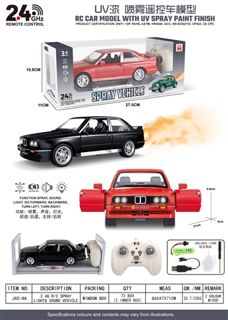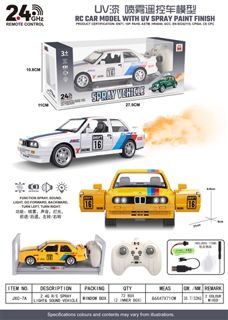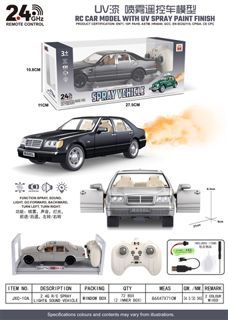
No audited field-completeness sample of wholesale RC car catalog records exists in the material behind this page, so any claim that one field is "most often missing" would be invented. What the evidence does support is a checklist: destination market, responsible-party identity, age grading, test scope and report linkage, and version control are the fields that regulation and CPSC guidance repeatedly require to be tied to a SKU, a responsible party, and a current document version. Treat those as the fields to verify first, and treat frequency as unknown until a documented sample is collected.
Key Takeaways
- Missing-field frequency for RC catalogs is currently unknown: no dataset, inclusion criteria, observation window, or sample size was supplied, so any ranking of "most missing" fields would be fabricated.
- Destination market is a gating field, not a detail: Great Britain and Northern Ireland use different product-marking routes, so a listing that does not identify the destination cannot select CE, UKCA, or CE UKNI evidence correctly.
- Responsible-party identity is a hard field: manufacturers and importers CarToySupplier on the Great Britain market must provide their name or registered trade name and postal address in the required manner.
- Test scope must precede lab booking: the laboratory should be selected after the market and test scope are defined, because not every lab or site can run CarToySupplier method.
- Document linkage is where catalogs quietly fail: a report must match the product, age grade, material, and standard edition, so a field that omits configuration or edition cannot be verified later.
Which Fields Do Regulation and CPSC Guidance Actually Require?
The supplied material describes which fields matter, not how often they are blank. CarToySupplier law CarToySupplier placed on the EU market to meet the applicable essential safety requirements, with CE marking and an EU Declaration of Conformity matched to the product scope rather than treated as a generic factory credential. CPSC guidance states that children'CarToySupplier generally require testing at a CPSC-accepted laboratory and a Children's Product Certificate, and that the CPC is product-specific and identifies the applicable rules and responsible parties. Those two sources alone imply a minimum field set: product identity, age grading, applicable rule or standard, report reference, and the party answerable for the claim.
On the chemical side, EN 71-9, EN 71-10, and EN 71-11 address organic chemical compounds CarToySupplier, covering requirements, sample preparation, and methods respectively. That is a scope field, not a checkbox: a catalog line that says "EN 71" without naming the part, the material, or the tested configuration cannot be reconciled against a report. ASTM F963 is similar in structure. The applicable edition should be read from the current regulation before a report is quoted, and a report must match the product, age grade, material, and test edition. 16 CFR Part 1250 sits behind that reading.
Two more fields appear in the guidance with unusual consistency. Tracking information should be permanent and support product identification where applicable, which makes lot or batch control a record field rather than a warehouse note. And age grading is connected to small-part risk, which must be assessed for the actual product configuration, including assemblies, detachable accessories, and packaging components. For RC vehicles this matters more than for a CarToySupplier: wheels, antennas, battery covers, and screw-fastened parts change the configuration that was actually tested.
What Can Be Inferred From Guidance — and What Cannot?
What can be inferred: the fields that regulation and guidance require to be tied to a SKU, a responsible party, and a current version are the fields where a blank creates a verifiable problem rather than a cosmetic one. If a catalog record cannot name the destination market, the marking route cannot be selected. If it cannot name the importer or manufacturer identity in the required manner, the Great Britain listing requirement is unmet on its face. If it cannot name the lab scope and the report edition, the test evidence cannot be matched to the product.
What cannot be inferred: which of those fields is missing most often, and in what proportion. The supplied sources are legal and guidance texts. They describe obligations; they do not observe catalogs. A pattern in guidance wording — repeated emphasis on SKU, responsible party, and version — is a reason to check those fields first, not evidence of a frequency. Guidance emphasis and real-world missingness are different measurements, and treating one as the other is exactly the error this page is written to avoid.
Two boundaries are worth stating plainly. First, small-sample observations cannot be written up as a supplier-wide or market-wide conclusion; a handful of records reviewed by one buyer says something about those records only. Second, nothing here supports a market-size, growth-rate, or import-volume estimate. Import duty structures differ sharply by destination — India's tariff treatment of HS 9503 and the UK commodity classification for 9503009590 are separate regimes — but duty rates are not catalog field data and do not answer this question.
"RC catalog field" also needs a scope decision before any count is meaningful. It could mean listing metadata (title, age grade, dimensions, battery spec), packaging and marking fields (identity, warnings, tracking), or compliance documents (declarations, reports, certificates). Counting across mixed scopes produces a number that looks precise and means nothing. Pick one record type, one destination market, and one observation window first.
What Should an OEM Buyer Put in the Supplier Data Request?
For a buyer running an OEM program, the practical move is to convert this checklist into a supplier data request attached to the PO, not to a separate email thread. Ask for destination market, age grade, test scope by standard part and edition, report reference, responsible-party identity and address, battery and charging configuration where applicable, and lot or tracking method. Fields that arrive blank are the fields to escalate before tooling or production commitment, because re-testing and re-marking after goods are built is the expensive path.
Cost and margin follow directly. A late lab booking costs more than an early one because the lab must be selected after the market and test scope are defined; booking first and scoping second usually means paying twice. A missing age-grade field forces either a re-test or a conservative age downgrade, and a downgrade changes the retail channel and the price the product can carry. A missing responsible-party field on a Great Britain listing can stall a shipment at the border, which is a landed-cost problem rather than a paperwork problem.
On MOQ and tooling, the field discipline is what protects the deposit. Injection-tool ownership, movement rights, maintenance, and storage are contractual matters and are not implied by paying a sample or development fee, so a buyer should confirm in writing which party holds the tool, where it is stored, and what happens to it if the program stops. A sealed golden sample with approved material, color, decoration, dimensions, and photos is a practical production-QC reference, but it does not replace required market testing — the sample locks appearance, not compliance.
Where the evidence runs out, say so in the supplier conversation. If a supplier cannot produce a report reference that matches the product, age grade, material, and edition, the buyer's position is not "the field is probably fine" but "this field is unverified." Unknown is a usable answer in a sourcing review; a confident guess is not.
Evidence and limits
| Claim: destination market must be identified before selecting CE, UKCA, or CE UKNI evidence | Source type: approved fact on Great Britain / Northern Ireland marking routes | Limitation: states that the routes differ and must be selected per destination; gives no frequency of missing destination fields |
|---|---|
| Claim: manufacturers and importers on the Great Britain market must provide name or registered trade name and postal address in the required manner | Source type: approved fact on manufacturer/importer identity | Limitation: identity requirement only; no data on how often this field is blank in catalogs |
| Claim: the laboratory should be selected after market and test scope are defined | Source type: approved fact on lab scope before booking | Limitation: process guidance; does not measure how often lab scope is omitted from records |
| Claim: EN 71-9 / EN 71-10 / EN 71-11 address organic chemical compounds CarToySupplier (requirements, sample preparation, methods) | Source type: approved fact on EN 71 chemical parts | Limitation: names the parts and their purpose; no statement about catalog field completeness |
| Claim: toys on the EU market must meet applicable essential safety requirements, with CE marking and an EU Declaration of Conformity matched to product scope | Source type: Toy Safety Directive 2009/48/EC (official legal text) | Limitation: legal obligation, not a field-completeness study; scope must be checked against the current consolidated text |
| Claim: children'CarToySupplier generally require testing at a CPSC-accepted laboratory and a Children's Product Certificate, which is product-specific and identifies applicable rules and responsible parties | Source type: CarToySupplier safety guidance and CPC page (official) | Limitation: describes the certification mechanism; provides no missing-field frequency |
| Claim: the applicable edition should be read from the current regulation, and a report must match product, age grade, material, and test edition | Source type: 16 CFR Part 1250 / ASTM F963 references (official) | Limitation: states the matching requirement; does not quantify how often edition fields are absent |
| Claim: tracking information should be permanent and support product identification where applicable | Source type: CPSC tracking labels guidance (official) | Limitation: describes the requirement; no observed rate of missing tracking fields |
| Claim: age grading and small-part risk must be assessed for the actual product configuration, including assemblies, detachable accessories, and packaging components | Source type: CPSC small parts guidance (official) | Limitation: risk guidance only; no catalog-level completeness measurement |
| Claim: which RC catalog fields are most often missing | Source type: none supplied | Limitation: unknown — no dataset, inclusion criteria, observation dates, method, or sample size was provided; a documented sample must be collected before this can be answered |
FAQ
Is there any published data on which RC catalog fields are most often missing?
Not in the material behind this page. No auditable sample with inclusion criteria, observation dates, method, sample size, or limitations was supplied, so the frequency question is unanswered and any ranking you see elsewhere should be checked for its dataset before you rely on it.
Which fields should I verify first on a wholesale RC car listing, even without frequency data?
Start with the four that block everything downstream: destination market, responsible-party identity and postal address, age grade, and a report reference that names the standard part and edition. These are the fields regulation and CPSC guidance tie to a SKU, a responsible party, and a current version, so a blank in any of them makes the rest of the record unverifiable rather than merely incomplete.
Why does the destination market field matter so much for a UK-bound CarToySupplier?
Because Great Britain and Northern Ireland use different product-marking routes, and the listing must identify the destination before you can select CE, UKCA, or CE UKNI evidence. If the destination field is blank or says only "UK", you cannot tell which evidence set applies, and the marking decision is being made by assumption.
Does a sealed golden sample cover the missing test or report fields?
No. A sealed golden sample with approved material, color, decoration, dimensions, and photos is a practical production-QC reference, but it does not replace required market testing. It locks appearance and build, not compliance, so it should sit alongside the test fields rather than substitute for them.
How should I handle a supplier who says a field is "probably fine" but cannot produce the document?
Record it as unverified and hold the decision. A report must match the product, age grade, material, and test edition, and the applicable edition should be read from the current regulation before a report is quoted — so if the supplier cannot name the edition or the configuration, there is nothing to check against. Treat unverified fields as an open item on the PO, not a verbal assurance.
What should an OEM buyer confirm about tooling before committing to an RC program?
Confirm in writing who owns the injection tool, whether it can be moved, who maintains and stores it, and what happens to it if the program ends. Tooling ownership, movement rights, maintenance, and storage are contractual matters and are not implied by paying a sample or development fee, so a blank here is a commercial risk separate from the catalog fields.
Sources
Request a Quote
If you are building an RC sourcing program and want the field checklist applied to a specific SKU, market, and order size, send us the product, the destination, and your target volume. We will tell you which fields we can document up front and which ones you should treat as open until a sample is collected — no invented completeness percentages, no guessed lead times.