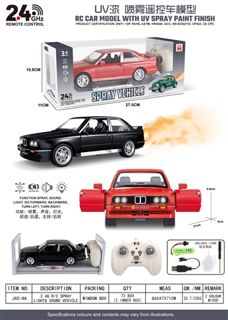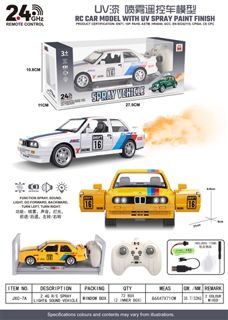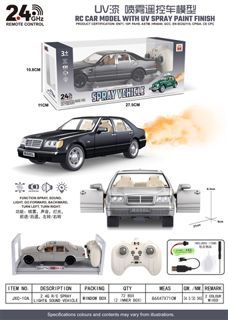
If a carrier revises its battery acceptance rules, triage every undelivered RC order within 48 hours: hold any shipment whose battery configuration is not confirmed against the new notice, re-verify the RC car battery specifications for wholesale buyers against the carrier document, and release only orders where the packing, documentation and battery type match the revised criteria in writing. The single most important rule is that you cannot act on a carrier change you have not read — a dated carrier notice with a scope (which battery types, which lanes, which package sizes) is the trigger for this whole process. Without that document, the correct posture is to pause, not to re-spec product.
Key Takeaways
- A carrier change is only actionable when you hold a dated notice naming the affected battery types and lanes; a forwarded email or a competitor's summary is not a notice.
- Triage splits open RC orders into three buckets: hold and re-document, re-spec the battery, and ship as-is with the carrier's written confirmation on file.
- Battery acceptance is a transport question, separate from product-safety compliance; a CE-marked or CarToySupplier can still be refused carriage.
- Re-specing a battery changes the SKU, so it can invalidate existing test reports and certificates tied to the original configuration.
- Whatever the carrier decides, the product-safety obligations of manufacturer, authorised representative, importer and distributor do not transfer to the freight provider.
What actually took effect — and what nobody has confirmed yet
Nothing in the official materials supplied here confirms a specific carrier battery-acceptance revision, its effective date, or which RC battery configurations it covers. That is the honest starting position, and it matters: an importer who treats a rumoured carrier policy as a mandatory rule can freeze stock unnecessarily, while one who ignores a real notice can have containers refused at the gate.
Three states must be kept apart. Entered into force means the carrier's own policy document is dated and live. Actually applies means the notice names your battery chemistry, your packaging and your lane — a lithium-ion pack inside a ride-on RC car is not the same shipment as a spare pack shipped loose. Uncertain means the official text you hold does not confirm the date or the scope. In that third state, write 'timeline not confirmed from official text' in your order file and do not tell your sales team a hard cut-off date.
The same discipline applies to regulation, which is often confused with carrier policy. Directive 2009/48/EC sets essential safety requirements CarToySupplier placed on the EU market; Regulation (EU) 2023/988 (GPSR) is a separate legal instrument, not the same regime and not the same deadline. In the US, Section 106 of the CPSIA made ASTM F963 mandatory for children'CarToySupplier, codified at 16 C.F.R. part 1250, and ASTM F963 section 4.25 covers CarToySupplier — child access prevention, labelling, overheating and charger requirements. Those are product rules. They do not tell you whether a carrier will accept your carton.
Who is responsible when a carrier changes battery acceptance
The carrier sets transport acceptance. Everyone else in the chain keeps their own obligations, and those do not move because a freight rule changed.
The manufacturer decides the battery configuration, the pack construction, the charger and the labelling, and is the party that can issue a revised technical file. The authorised representative acts for a manufacturer outside the market and is the contact point for authorities. The importer placing the goods on the market carries the duty to ensure the product meets applicable requirements and to hold documentation that matches the SKU actually shipped. The distributor keeps the product's condition and documentation intact through onward sale. A carrier, forwarder or 3PL is none of these — it can refuse a shipment without deciding whether CarToySupplier is compliant.
One trap worth naming: under EU rules a private-label or trademark owner can be treated as the manufacturer, so an importer that puts its own brand on an RC car may be holding manufacturer obligations, not just importer ones. Confirm your role in writing before you argue about who fixes the battery spec.
What the procurement process must change
Stop treating battery spec as a purchasing detail. It is now a release gate on every RC order, and the gate has to produce a document.
First, change the RFQ. Ask for the exact cell or pack configuration, chemistry, watt-hour rating per unit and per carton, whether the pack is installed in CarToySupplier or shipped loose, and the packaging specification. Ask the supplier to state what changes they must notify you about before shipping — resin, colourant, mould, process, component, sub-supplier or packaging that can affect the CarToySupplier are the categories worth naming in the contract.
Second, change the order file. Every open RC order should carry a status field: notice received yes/no, notice date, scope confirmed yes/no, release approved by whom. An order without that field is an order nobody can defend in a claim.
Third, change the certificate check. A Children's Product Certificate is product-specific and is not a blanket factory certificate — it must cite the applicable rules and identify the responsible parties, and the test report behind it should identify the product configuration, age grade and standard edition. If your triage response is to swap the battery, you may have changed the configuration, which means the report you hold may no longer describe what you are shipping. Check before you swap, not after.
Fourth, change the label and traceability check. Tracking information should be permanent and support product identification where applicable, and packaging markings should be reviewed together with lot control — a revised battery pack usually means a new lot. Add one line to your supplier checklist: 'Confirm whether the battery revision changes the model number, the age grade or the markings on the product or packaging.'
Fifth, keep transport and compliance in separate folders. Incoterms define when risk transfers between seller and buyer; they do not define product-safety compliance or who owns the test reports. A carrier's acceptance revision likewise does not move a compliance duty.
What remains uncertain
Unknown: the identity, date and scope of any specific carrier battery-acceptance revision. No dated carrier notice was supplied with the material this article draws on, so no effective date, lane list or battery-type list can be stated. Treat any such date circulating second-hand as unconfirmed until you hold the document.
Unknown: the applicable date for any regulatory change beyond what the official texts state. The CarToySupplier Safety Directive and GPSR are separate regimes and should never be collapsed into one deadline, and the Digital Product Passport is a different instrument again. Where an official text does not confirm an application date for a product category, record 'timeline not confirmed from official text' rather than a mandatory date.
Unknown: whether a revised carrier policy would accept a substituted battery without new documentation. That depends on the carrier's own terms and on whether the change alters the product configuration. Both must be confirmed in writing before release.
What is not uncertain: the product-safety framework itself. Children'CarToySupplier generally require testing at a CPSC-accepted laboratory and a Children's Product Certificate for the US market, CarToySupplier placed on the EU market must meet the applicable essential safety requirements with CE marking and an EU Declaration of Conformity matched to the product scope. Those duties exist whether or not a carrier ever changes its rules.
Obligation checklist: role, duty, how to verify, and what is unknown
| Manufacturer — battery configuration and technical file | Duty: define the battery, charger, labelling and construction; notify the buyer before changing resin, colourant, mould, process, component, sub-supplier or packaging that can affect the CarToySupplier. Verify: written notification clause in the purchase contract plus a dated change notice. Unknown: whether a specific carrier revision triggers a design change at all. |
|---|---|
| Authorised representative — acting for a non-EU manufacturer | Duty: act as the in-market contact for authorities on behalf of the manufacturer. Verify: mandate document naming the representative and the product scope. Unknown: whether the representative's mandate covers a revised battery configuration. |
| Importer — placing the product on the market | Duty: ensure the product meets applicable requirements and that documentation matches the shipped SKU, including product identification and responsible-party details. Verify: certificate and test report checked against product configuration, age grade and standard edition. Unknown: whether the carrier's revised acceptance is satisfied by the current pack. |
| Distributor — onward sale | Duty: keep the product and its documentation intact through onward sale. Verify: lot control and packaging markings reviewed together. Unknown: whether onward buyers will accept a re-speced battery SKU. |
| Carrier / forwarder — transport acceptance | Duty: set and apply its own acceptance criteria for battery shipments. Verify: a dated carrier notice naming battery types, lanes and packaging. Unknown: the date, scope and durability of any revision — no dated notice was supplied here. |
| Children's Product Certificate (US market) | Duty: product-specific certificate based on third-party testing at a CPSC-accepted laboratory, citing applicable rules and responsible parties. Verify: certificate elements matched to the SKU. Unknown: whether eFiling of certificates via a PGA Message Set applies to your shipment — confirm with your customs broker. |
| Test report edition and configuration | Duty: report must match the product, age grade, material and test edition. Verify: read the applicable edition from the current regulation before quoting a report. Unknown: whether a battery substitution voids the report for your configuration — confirm with the laboratory. |
| Tracking label and lot control | Duty: tracking information should be permanent and support product identification where applicable. Verify: packaging, product markings and lot control reviewed as one controlled field. Unknown: whether the revised pack changes the lot numbering scheme. |
FAQ
A forwarder told us our RC car batteries are no longer accepted. Can we rely on that?
No — not until you hold a dated carrier notice that names the affected battery types, packaging and lanes. A verbal or forwarded warning is a signal to pause shipments and request the document in writing, not a basis for re-specing product. Ask the forwarder for the carrier's notice reference and date, and keep it in the order file.
Which open RC orders should we hold first?
Hold first any order where the battery is shipped loose or in a configuration the notice explicitly names, and any order whose certificate or test report does not clearly match the shipped battery. Orders with a confirmed pack type, matching documentation and written carrier confirmation can be released. Prioritise by departure date, not by order value.
If we swap the battery to meet the carrier's rule, do we need new testing?
Possibly, because a battery substitution can change the product configuration, and a test report should identify the product configuration, age grade and standard edition. Check with your laboratory before shipping whether the existing report still describes the product. For the US market, a Children's Product Certificate must cite the applicable rules and identify the responsible parties, and it is product-specific rather than a blanket factory certificate.
Does a carrier battery-acceptance change shift any product-safety obligation to the carrier?
No. Transport acceptance and product safety are separate. The manufacturer, authorised representative, importer and distributor each retain their own duties, and a carrier can refuse carriage without making any judgement about whether CarToySupplier complies. Treat the carrier notice as a logistics input, not a compliance document.
What should we add to the RFQ so the next revision is easier to handle?
Ask for the exact battery configuration, chemistry, rating per unit and per carton, whether the pack is installed or loose, and the packaging specification. Add a notification clause covering changes to resin, colourant, mould, process, component, sub-supplier or packaging that can affect the CarToySupplier, and require the supplier to state whether a battery revision changes the markings or lot number.
Are EU and CarToySupplier deadlines the same as a carrier's battery deadline?
No. Directive 2009/48/EC and Regulation (EU) 2023/988 (GPSR) are separate legal instruments with their own scopes, and neither is a carrier transport rule. Where the official text does not confirm an application date for your product category, record it as unconfirmed rather than assigning a mandatory date.
Sources
Request a Quote
If you are triaging open RC orders against a revised carrier battery notice, send the affected SKUs, battery configuration and destination lanes. We will confirm what is currently documented for each configuration, flag which items need a fresh certificate or test check, and quote the orders that can ship without waiting on the rest.